
- All Posts
- Contract Management
- IPR Management
- Litigation Management
A user agreement is a legally binding contract between a service provider, such as a website, app, or online platform, and the individuals who use it. It defines the rules, rights, and obligations that govern the relationship between the platform and its users, covering everything from acceptable use and intellectual property to liability limitations and dispute resolution.
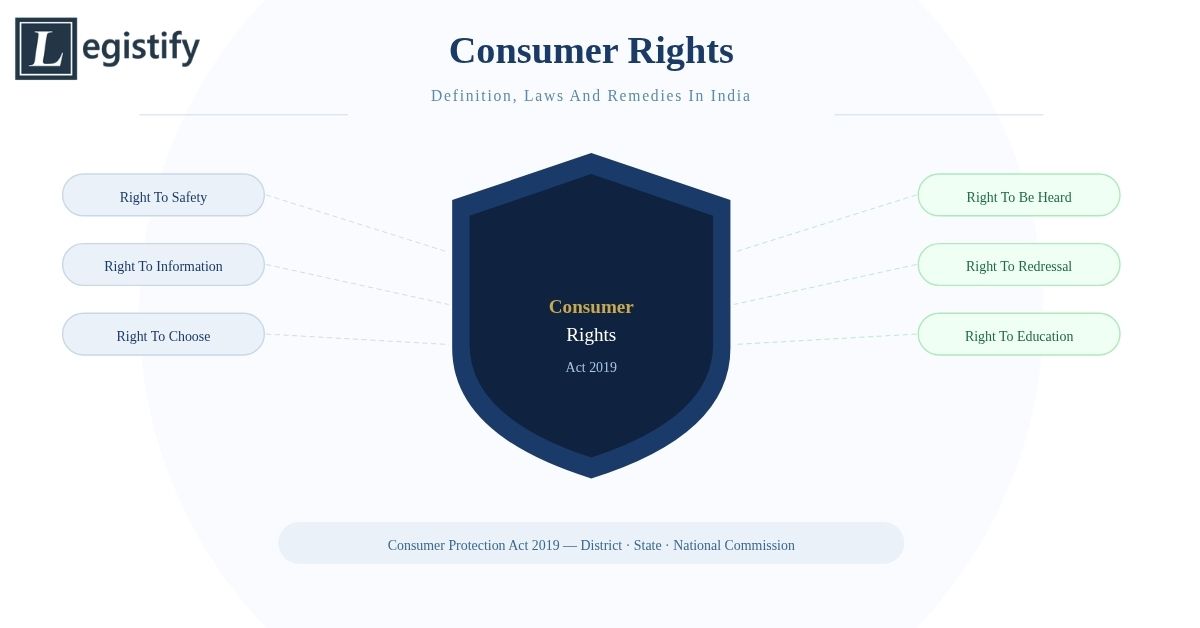
Consumer rights are the legal protections available to individuals who purchase goods or services. In India, consumer rights are primarily governed by the Consumer Protection Act, 2019, which replaced the earlier Consumer Protection Act, 1986. The 2019 Act significantly strengthened consumer protections, expanded the definition of consumer, introduced new remedies, and created new regulatory bodies to address the challenges of...
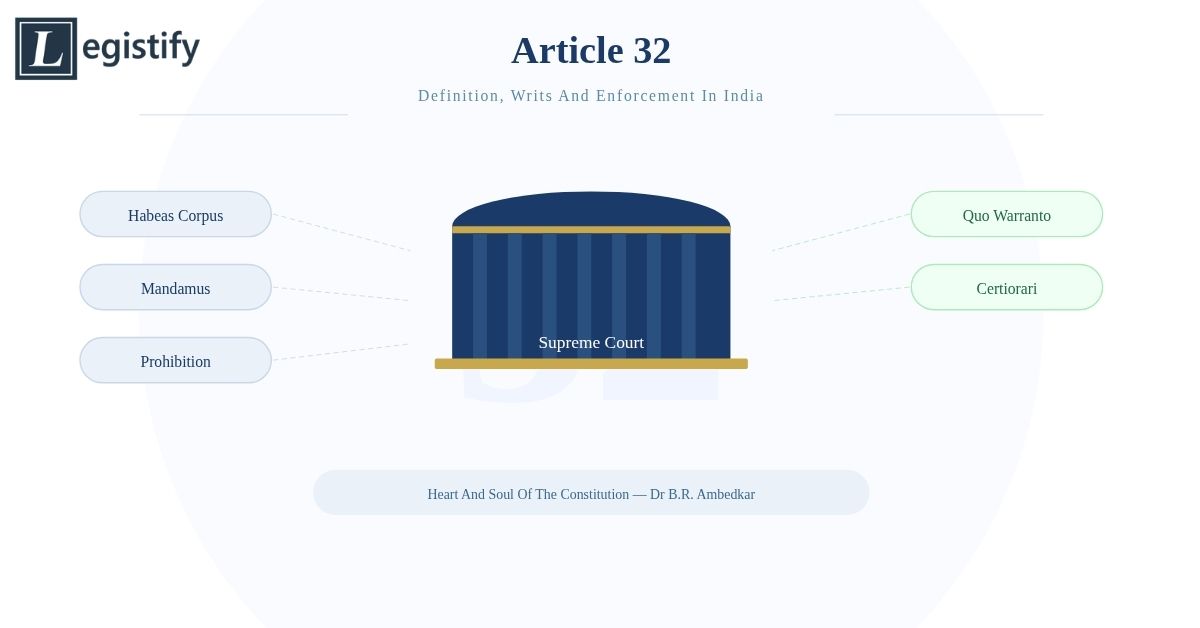
Article 32 of the Indian Constitution is the constitutional provision that gives every citizen the right to approach the Supreme Court of India directly for the enforcement of fundamental rights. It is one of the most significant provisions of the Constitution, describing it as its "heart and soul," as Dr B.R. Ambedkar called it during the Constituent Assembly debates.
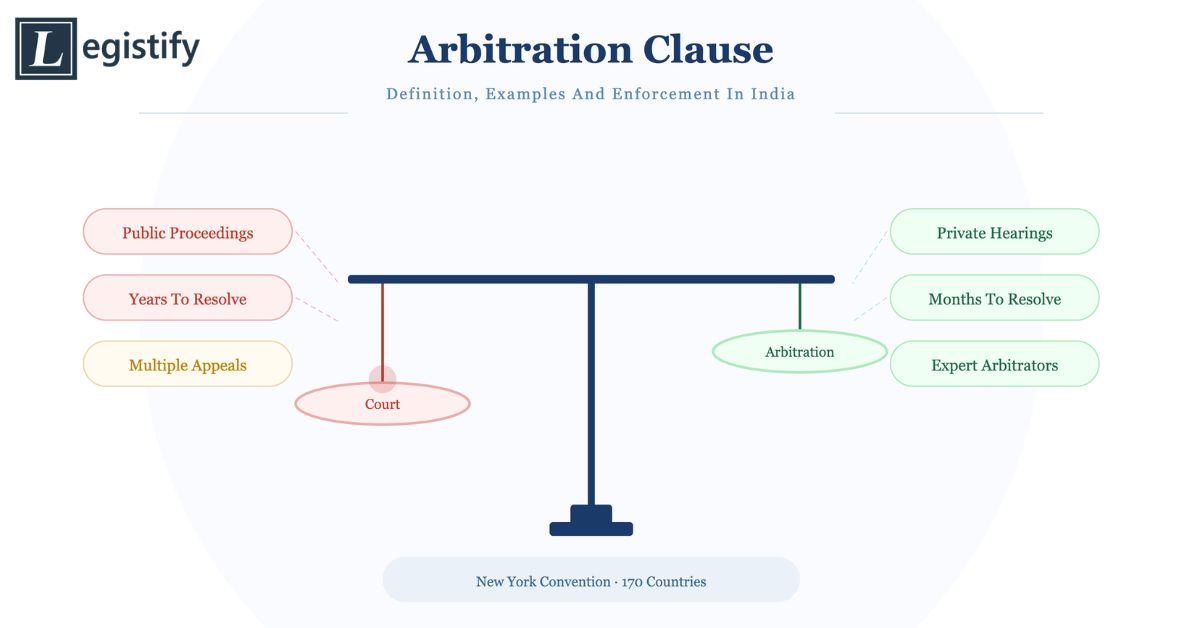
An arbitration clause is a provision in a contract that requires the parties to resolve disputes arising from the contract through arbitration rather than through court litigation. It is one of the most commercially significant provisions in any commercial contract and one of the most frequently negotiated.
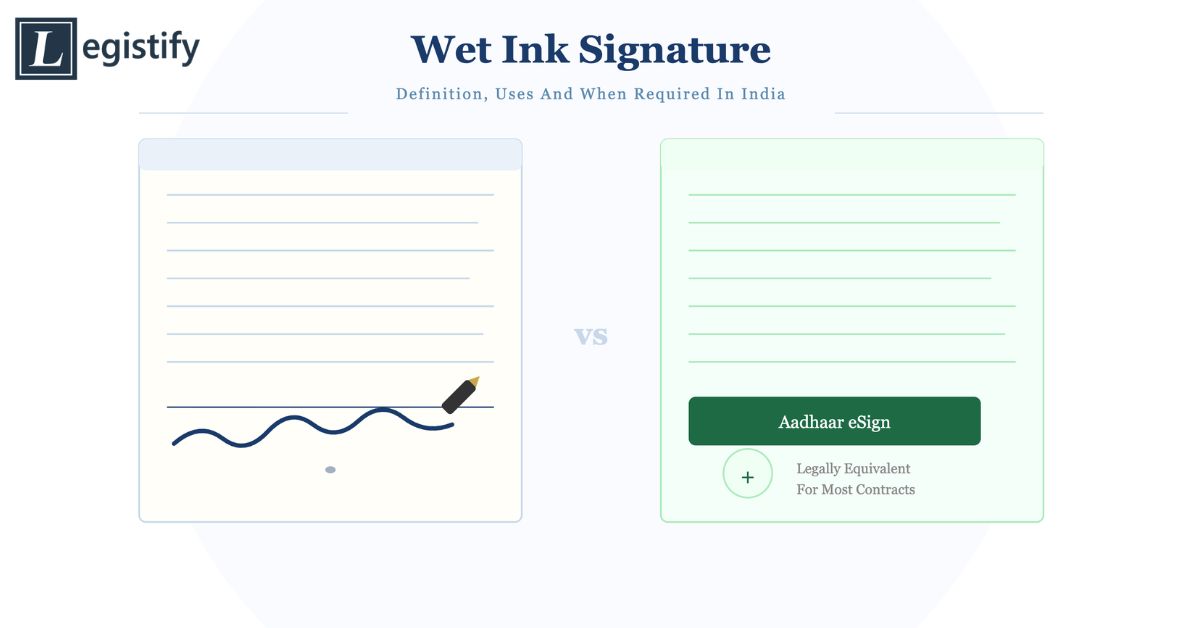
A wet ink signature is a handwritten signature applied directly to a physical document using a pen. The term comes from the literal ink that is wet immediately after signing. It distinguishes a traditional handwritten signature from digital or electronic signatures applied to documents in electronic form.
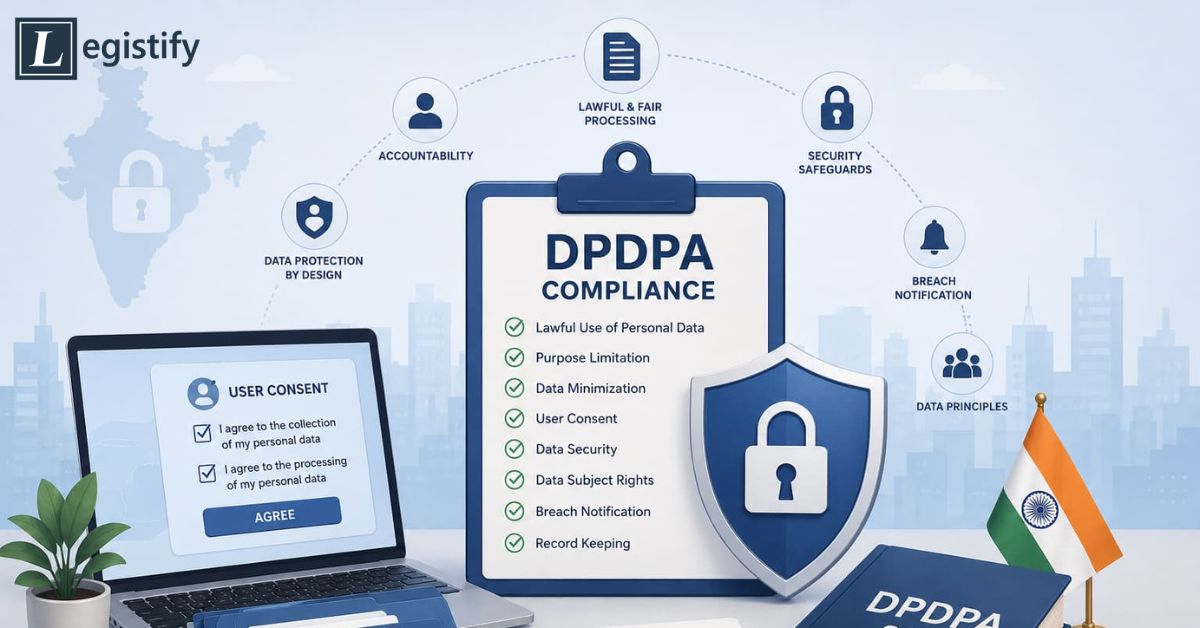
DPDPA compliance refers to an organisation's adherence to the requirements of the Digital Personal Data Protection Act, 2023, India's first comprehensive data protection legislation. The Act governs the processing of digital personal data in India and establishes a framework of rights for individuals and obligations for organisations that process their data.

Force majeure is a contractual provision that excuses one or both parties from performing their contractual obligations when an extraordinary event beyond their control prevents or impedes performance. The term comes from French, meaning "superior force", and refers to events that are so unusual and unforeseeable that they fall outside the normal risks that contracting parties are expected to bear.

A bilateral contract is a contract in which both parties make promises to each other. Each party is both a promisor and a promisee: one party promises to do something, and the other party promises to do something in return. The mutual exchange of promises is what gives a bilateral contract its name and what distinguishes it from a unilateral...

Common contract issues are the ones that appear repeatedly in the same forms, in the same clause types, across contracts of different types and sizes. They are common not because they are obvious but because they are easy to overlook under time pressure, because business teams accept language from counterparties without understanding the implications, and because legal review is sometimes...