
- All Posts
- Contract Management
- IPR Management
- Litigation Management
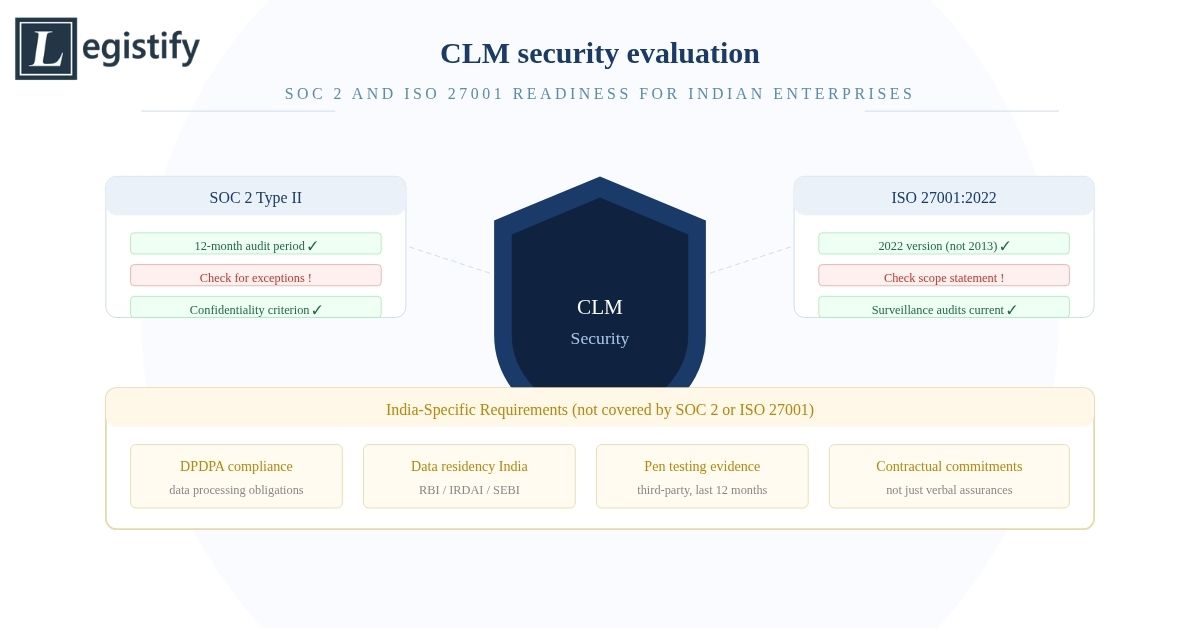
CLM security evaluation is not completed by confirming that a vendor holds SOC 2 and ISO 27001 certifications. Most enterprise CLM vendors hold one or both. The certifications are a starting point, not a conclusion. What they tell you depends on what type of certification it is, what scope it covers, how old it is, whether it has any noted...
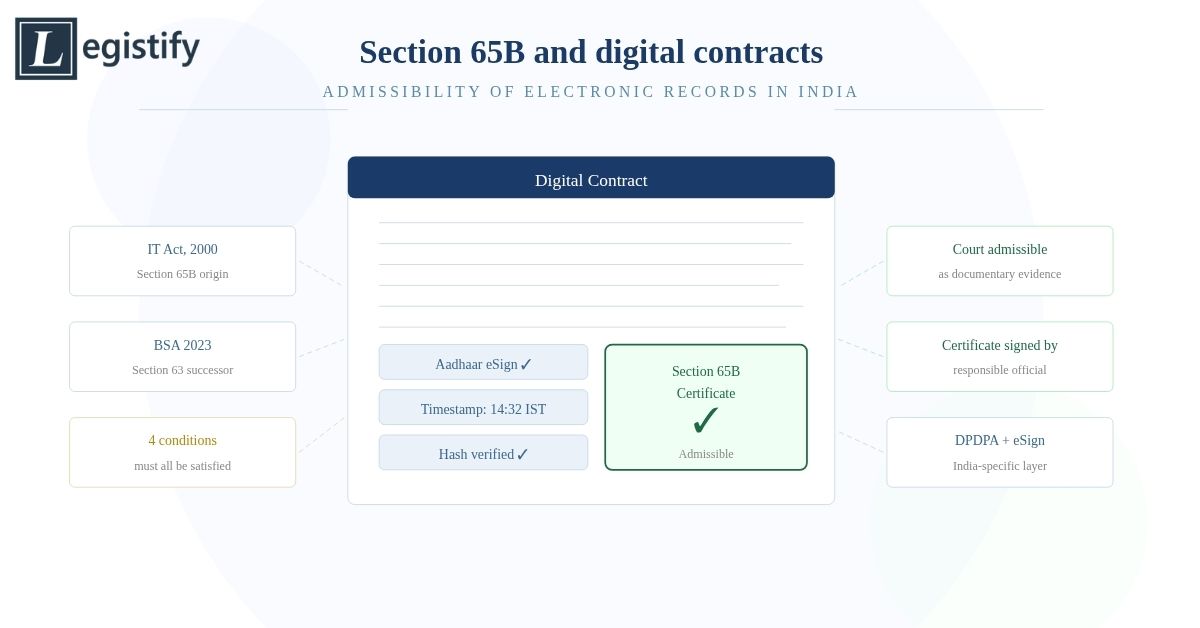
Section 65B of the Indian Evidence Act, 1872, governs how electronic records, including digital contracts, are admitted as evidence in Indian courts. For enterprise legal teams managing large volumes of electronically executed agreements, understanding Section 65B is not an academic exercise. It is the difference between a digital contract that is enforceable in a dispute and one that cannot be...
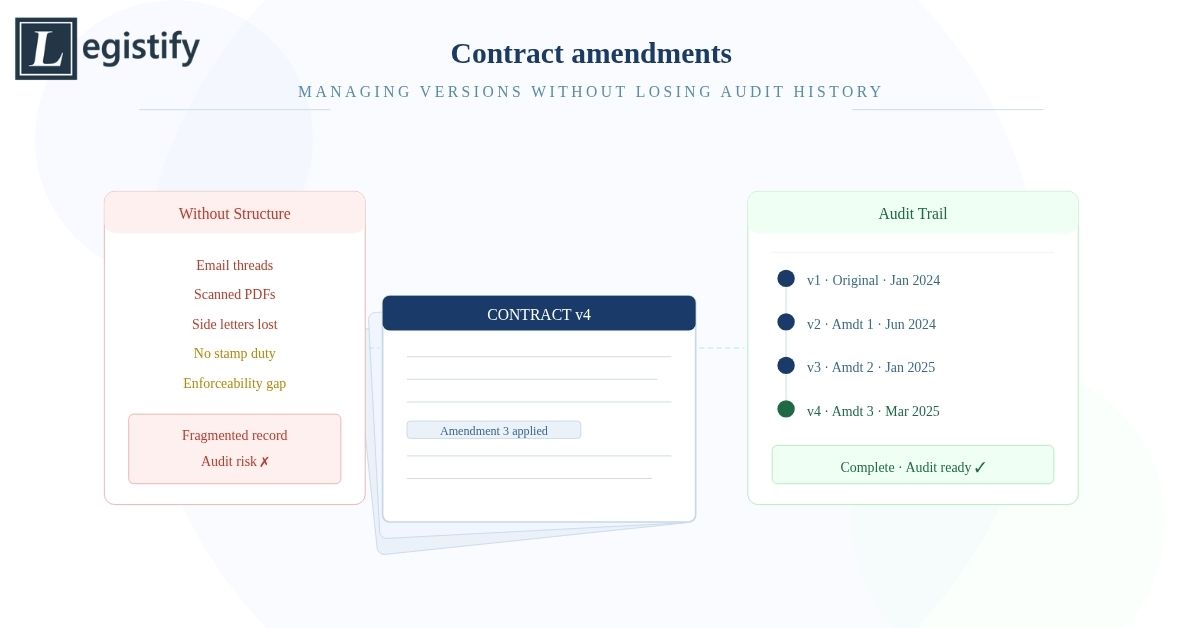
Contract amendments are a routine part of enterprise contract management. Business conditions change. Commercial terms need adjustment. Scope modifications arise from project developments. Regulatory requirements create new obligations that need to be incorporated into existing agreements. For a large enterprise managing hundreds of active contracts, amendments are a continuous workflow, not an occasional event.
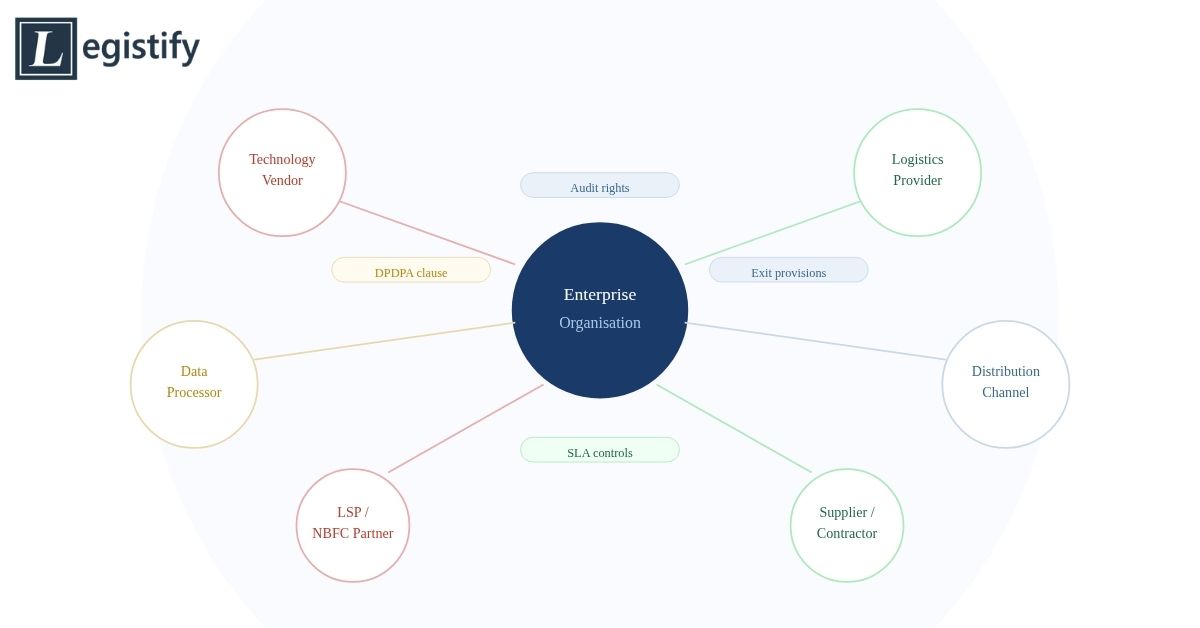
Third-party risk management is the process of identifying, assessing, and mitigating the risks that arise from an organisation's relationships with external parties: vendors, suppliers, service providers, technology partners, outsourced functions, and any other third party that has access to the organisation's data, systems, operations, or customers.
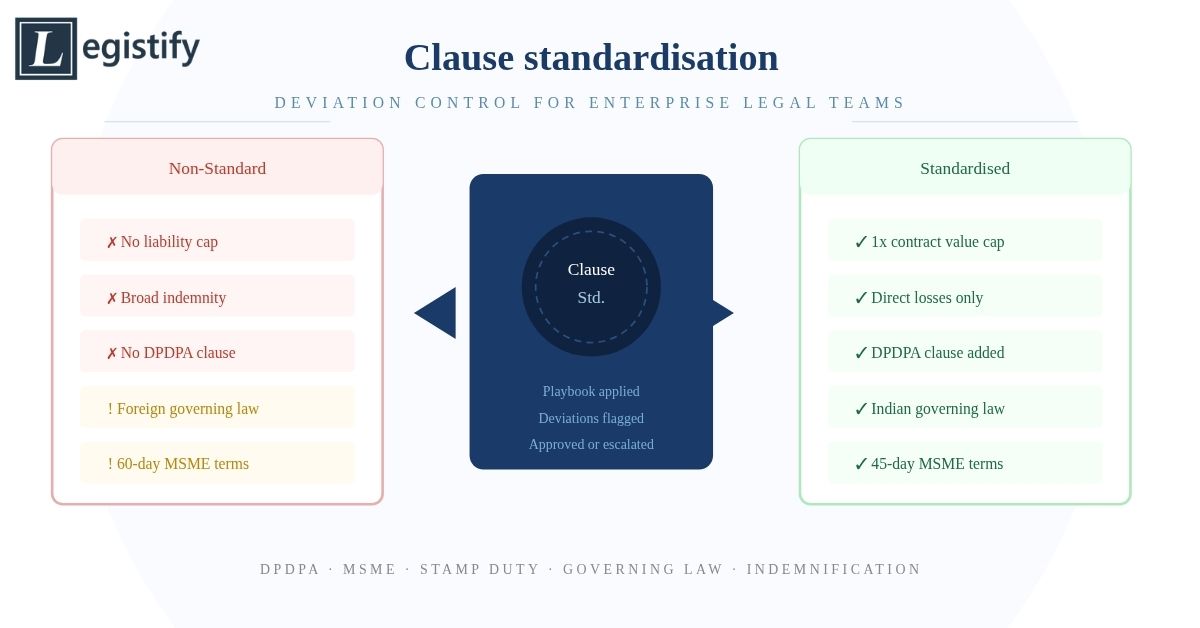
Clause standardisation is the process of defining approved language for the key provisions in an organisation's contracts, establishing fallback positions for negotiation, and building systems to ensure that deviations from those standards are identified, escalated, and documented. For enterprise legal teams managing high volumes of contracts across multiple business units, clause standardisation is the foundation on which contract governance is...
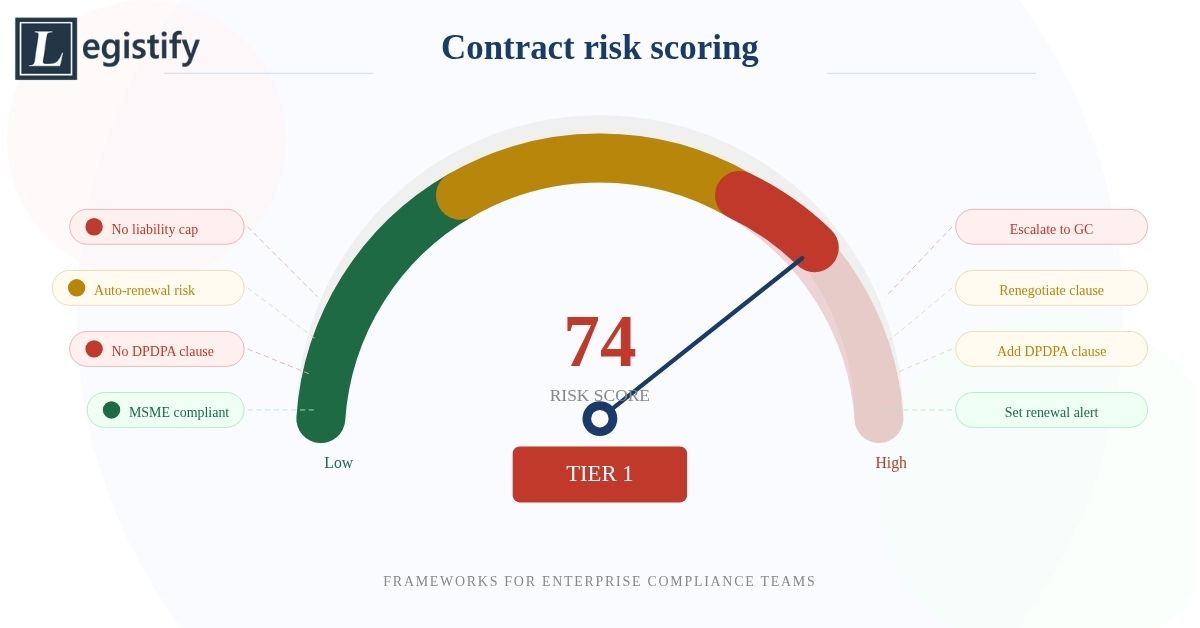
Contract risk scoring is the systematic process of assigning a quantified risk level to a contract or contract clause based on predefined criteria. For enterprise compliance teams managing hundreds or thousands of active agreements, contract risk scoring turns the subjective judgment of "this contract looks risky" into a structured, consistent, and scalable process that can be applied across the full...
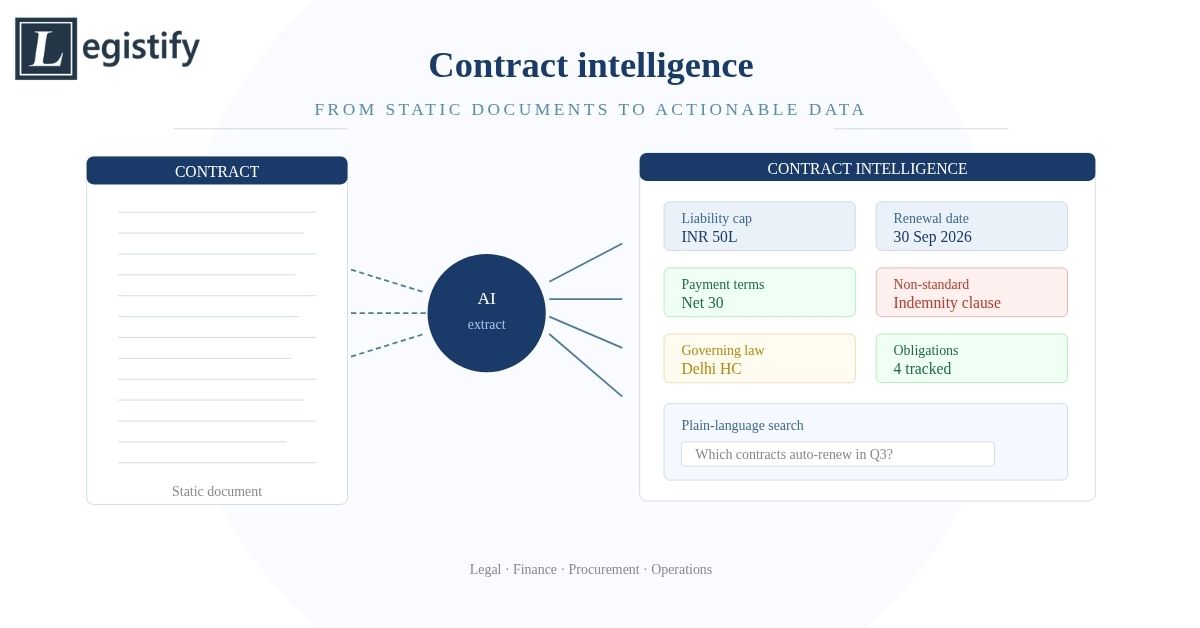
Contract intelligence is the process of turning contracts from static legal documents into structured, searchable, and actionable business data. Using artificial intelligence, natural language processing, and machine learning, contract intelligence platforms read contracts, extract key terms and obligations, identify risks, and make the information accessible to legal, finance, and procurement teams in a form they can actually use.
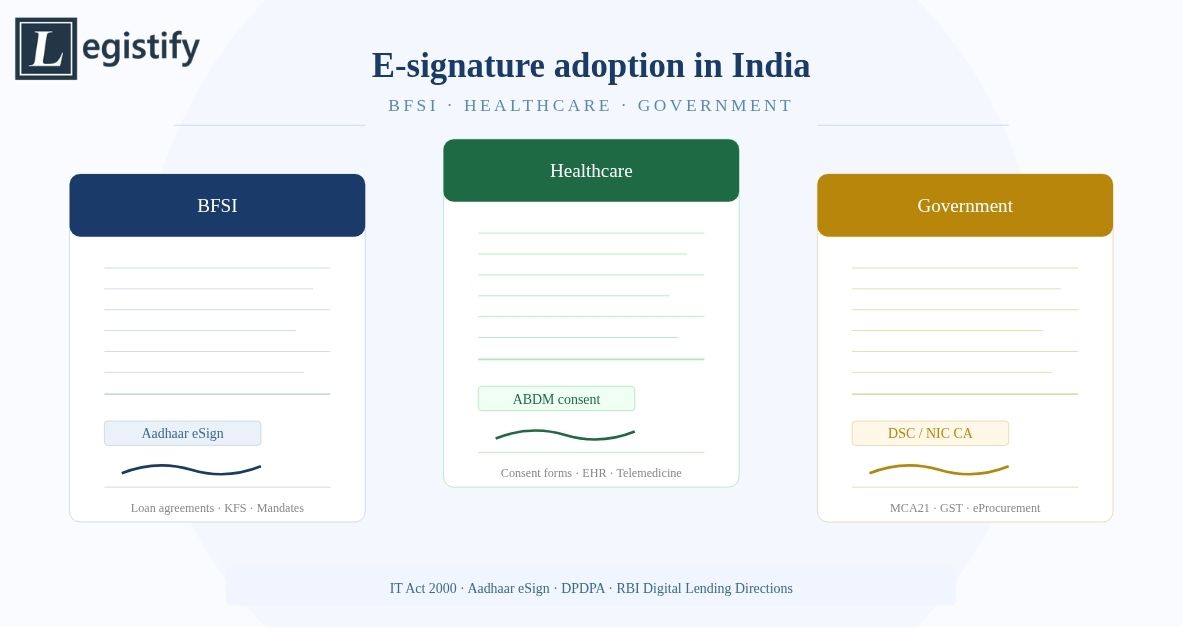
E-signature adoption in BFSI, healthcare and government in India is no longer a question of whether electronic signing is legally valid. The Information Technology Act, 2000 settled that over two decades ago. The question today is how organisations in each of these sectors are implementing e-signatures in a way that is consistent, secure, and audit-ready at the volumes they need...

A contract lifecycle management platform holds some of the most sensitive commercial data an organisation produces. Executed agreements, pricing commitments, indemnification caps, liability thresholds, vendor terms, and confidential counterparty information all sit in one place. For enterprise procurement teams evaluating CLM vendors, security is not a secondary consideration to be reviewed after functionality. It is a foundational requirement that shapes...