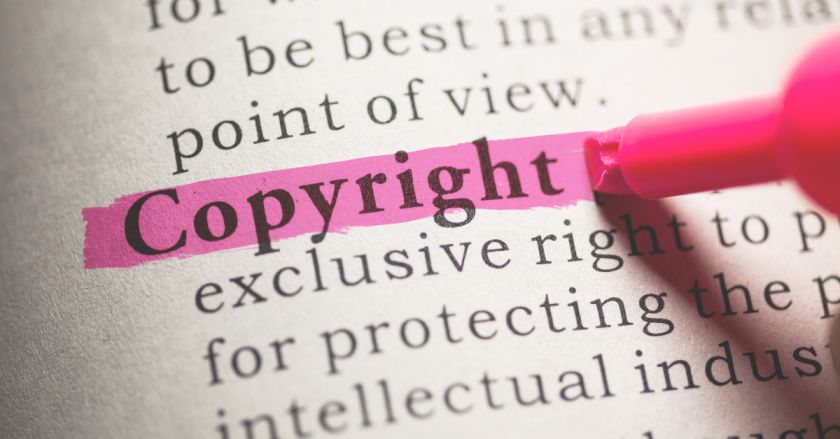
Copyright aims at providing protection to authors (writers, artists, music composers, etc.) on their creations. Such creations are usually designated as “works”.
Indian copyright law is at equality with the worldwide guidelines as contained in TRIPS. The (Indian) Copyright Act, 1957, as per the revisions in the year 1999, completely mirrors the Berne Convention for Protection of Literary and Artistic Works, 1886 and the Universal Copyrights Convention, to which India is a gathering. India is additionally a gathering to the Geneva Convention for the Protection of Rights of Producers of Phonograms and is a dynamic individual from the World Intellectual Property Organization (WIPO) and United Nations Educational, Scientific and Cultural Organization (“UNESCO”).
What is Covered Under Copyright Law?
Works covered by Copyright include, but are not limited to, literary works such as novels, poems and plays; reference works such as encyclopedias and dictionaries; databases; newspaper articles; films and TV programs; musical compositions; choreography; artistic works such as paintings, drawings, photographs and sculptures; architecture; and advertisements, maps and technical drawings. Copyright also protects computer programs. Copyright does not, however, extend to ideas, but only to the expression of thoughts.
For example, the idea of taking a picture of a sunset is not protected by copyright. Therefore, anyone may take such a picture. But a particular picture of a sunset taken by a photographer may be protected by copyright. In such a case, if someone else makes copies of the photograph, and starts selling them without the consent of the photographer, that person would be violating the photographer’s
rights.
Protection For Copyright
Copyright protection is obtained automatically without any need for registration or other formalities. A work enjoys protection by copyright as soon as it is created. However, many countries provide for a national system of optional registration and deposit of works. These systems facilitate, for example, questions involving disputes over ownership or creation, financing transactions, sales, assignments and
transfers of rights.
How Long Does Copyright Protection Last?
Under the Copyright Act, 1957, the term of protection depends on the type of work. For original literary, dramatic, musical, and artistic works, copyright lasts for the lifetime of the author plus 60 years, counted from the beginning of the calendar year following the year in which the author dies.
For cinematograph films, sound recordings, photographs, posthumous publications, anonymous or pseudonymous works, and works owned by the government or international organisations, the 60-year period is instead counted from the date of publication rather than from the death of an individual author.
This 60-year term was itself the result of the 1999 amendment to the Act, which extended the earlier 50-year term to bring Indian law in line with the TRIPS Agreement and international standards followed by most Berne Convention member countries.
What Rights Does Copyright Provide?
There are two types of rights under copyright:
- Economic rights, which allow the owner to derive financial reward from the use and exploitation of the work; and
- Moral rights, which highlight the personal link existing between the author and the work.
- Under economic rights, the creators of a work can use their work as they see fit. They can also authorize or prohibit the following acts- in relation to a work.
Moral rights Under Copyright
Under moral rights granted by copyright registration, the author may claim the right to have authorship recognized on the work. That is basically the right of the creator to have his or her name mentioned as the author, in particular when the work is used. The right to the integrity of the work, that is the right to object to the work being modified, or being used in contexts that may cause harm to the reputation or honor of the author.
Economic Rights Exploited
Many creative works protected by copyright require financial investment and professional skills for their production and further dissemination and mass distribution. Activities such as book publishing, sound recording or film producing are usually undertaken by specialized business organizations or companies, and not directly by the authors. Usually, authors and creators transfer their rights to these companies by way of contractual agreements, in return for compensation. The compensation may take different forms, such as lump-sum payments, or royalties based on a percentage of revenues generated by the work.
What is copyright registration?
Copyright exists automatically with original work but a copyright owner can take steps to enhance the protection. One of the main thing to do is copyright registration for the work. Copyright registration enforces the exclusive rights of copyright through litigation. Copyright registration allows people to find copyright information. It also allows people to understand that someone is claiming the copyright of that particular document or item.
To register a work, an applicant files Form XIV with the Copyright Office in New Delhi, along with the prescribed fee and copies of the work. Separate applications are generally required for each distinct work. Once filed, the Copyright Office issues a Diary Number, and the application enters a mandatory 30-day waiting period during which the filing is published in the Copyright Journal, allowing third parties to raise objections. If no objections are received, the application proceeds to examination, and the Registrar issues a Certificate of Registration once satisfied that the requirements have been met. The overall process typically takes two to three months, sometimes longer if objections are raised.
Although registration is not mandatory for copyright to exist, a registration certificate serves as prima facie evidence of ownership in court, which can be valuable when enforcing rights or resolving disputes over authorship.
Fair Dealing: Exceptions to Copyright Infringement
Copyright is not an unlimited right. Section 52 of the Copyright Act, 1957, sets out a list of acts that do not amount to infringement, commonly referred to as fair dealing exceptions. These exist to ensure that copyright protection does not unreasonably restrict activities that serve a broader public interest, such as education, research, criticism, review, and news reporting.
Fair dealing is not exhaustively defined in the Act, and whether a particular use qualifies is assessed based on factors such as the purpose of the use, the amount of the work used, and whether the use affects the market for the original work. Common examples include quoting a limited excerpt of a book for review purposes, using material for classroom teaching, or reporting on current events.
Key Amendments to the Copyright Act, 1957
The Copyright Act, 1957, has been amended several times to keep pace with new technology and India’s international commitments. Three amendments in particular have shaped the law as it stands today:
- The 1994 amendment extended protection to computer programs and clarified rights around software.
- The 1999 amendment aligned the Act with the TRIPS Agreement, extending the term of copyright protection to 60 years after the author’s death and strengthening recognition of moral rights.
- The 2012 amendment is considered the most significant modern update. It aligned Indian law with the WIPO Internet Treaties, clarified that “communication to the public” extends to digital and online platforms such as streaming services, strengthened royalty rights for lyricists, composers, and performers, and introduced accessibility provisions allowing accessible formats such as Braille and audio books to be created for persons with disabilities without infringing copyright.
Judicial decisions: History of Copyright
In Caterpillar Inc v Kailash Nichani the plaintiff, a foreign company, was carrying on business in several places in India including Delhi, through its Indian distributors and collaborators. The plaintiff claimed the relief of ad-interim injunction for preventing infringement of its copyright by the defendant, though the defendant was dealing in different goods. The Delhi High Court held that it was not necessary to show that the business being carried on by the plaintiff in Delhi should necessarily be in respect of footwear and articles of clothing as well. It is sufficient if the business was being carried on by the plaintiff in Delhi and further that there was an infringement of plaintiff’s copyright in respect of certain goods, which were being sold by the defendant in Delhi.
The court further held that section 62 of the Copyright Act makes an obvious and significant departure from the norm that the choice of jurisdiction should primarily be governed by the convenience of the defendant. The legislature in its wisdom introduced this provision laying down absolutely opposite norm than the one set out in section 20 CPC. The purpose is to expose the transgressor with inconvenience rather than compelling the sufferer to chase after the former.
Lachhman Das Behari Lal v Padam Trading Co the Delhi High Court observed that the plaintiff being a firm functioning at Delhi, the suit filed by it in the Delhi courts is maintainable and is not liable to be rejected under Order 7 Rule 11 of the CPC as prayed.
The Court further observed that the plea regarding want of territorial jurisdiction is not covered by Order7 rule 11 of CPC. The court observed that even if it is held that this court has not the territorial jurisdiction, the plaint cannot be rejected. At the most, it can be returned for presentation to the proper court.
Many authors do not have the ability or the means to manage their rights themselves. They often resort to collective management organizations or societies which provide for their members, the benefits of the organization’s administrative and legal expertise and efficiency in collecting, managing and disbursing royalties. These royalties are obtained from the national and international use of a member’s work on
a large scale, by, for example, broadcasting organizations, discotheques, restaurants, libraries, universities and schools.
Copyright contributes to human creativity by giving creators incentives in the form of recognition and fair economic rewards. Under this system of rights, creators are assured that their works can be disseminated without fear of unauthorized copying or piracy. This, in turn, helps increase access to the works and enhances the enjoyment of culture, knowledge, and entertainment all over the world.
Frequently Asked Questions (FAQs)
Is copyright registration mandatory in India?
No. Copyright protection arises automatically as soon as an original work is created, without any need for registration. Registration is optional, but it provides useful evidentiary benefits, such as serving as prima facie evidence of ownership in court, which can make enforcement easier if a dispute arises.
How long does copyright last in India?
For literary, dramatic, musical, and artistic works, copyright lasts for the lifetime of the author plus 60 years, counted from the year following the author’s death. For films, sound recordings, photographs, and works published anonymously or by the government, the 60-year term is counted from the date of publication instead.
What is the difference between copyright and a patent or trademark?
Copyright protects original creative expression, such as literary, artistic, musical, and cinematographic works. A patent protects new inventions and technical processes, while a trademark protects brand identifiers such as names, logos, and slogans. Each right is governed by a separate law in India and requires a different form of protection.
Can I use copyrighted material without permission?
In limited circumstances, yes. Section 52 of the Copyright Act, 1957, allows certain uses without the owner’s permission under the fair dealing exception, such as quoting a limited excerpt for review, criticism, teaching, or news reporting. Whether a specific use qualifies depends on factors like the purpose and amount of the work used.
How do I register a copyright in India?
An applicant files Form XIV with the Copyright Office along with the prescribed fee and a copy of the work. The Copyright Office issues a Diary Number and publishes the application in the Copyright Journal for a mandatory 30-day objection period. If no objections are raised, the application is examined and a registration certificate is issued. The process typically takes two to three months.
Does copyright protect ideas?
No. Copyright protects the specific expression of an idea, not the underlying idea itself. For example, the idea of photographing a sunset is not protected, but a specific photograph taken by a photographer is protected, and copying that exact photograph without permission would infringe the photographer’s rights.