
How to Respond to a Legal Notice in India: A Guide for Businesses
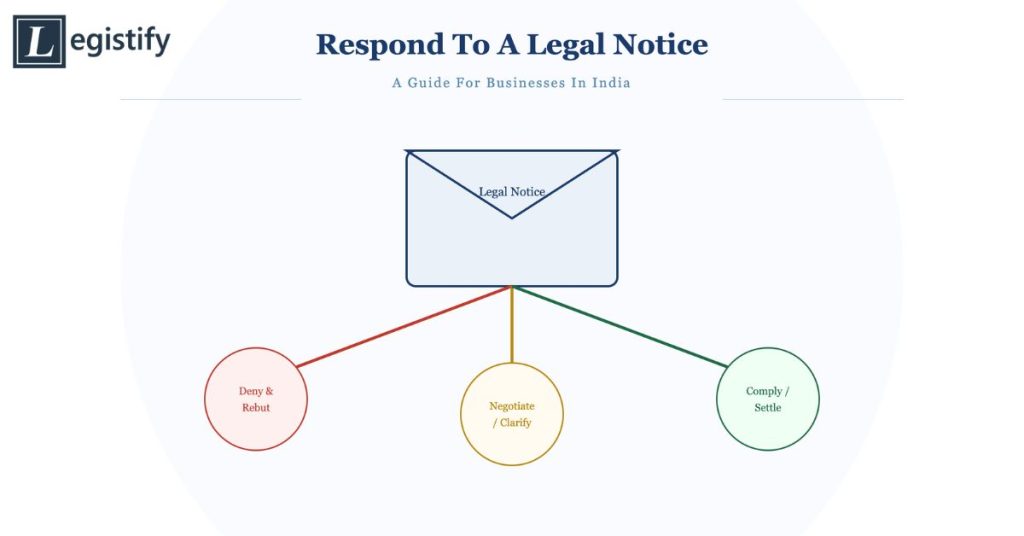
Receiving a legal notice can feel alarming, but it is important to understand what it actually is: a formal written communication, typically drafted by an advocate on a client’s behalf, informing the recipient of a grievance, demand, or intended legal action, and giving them an opportunity to respond or resolve the matter before formal litigation begins. A legal notice is not itself a lawsuit. It is frequently a required or strategic precursor to one, and how a business responds to it, or fails to respond, can significantly shape whether the matter escalates to court or resolves without litigation entirely. This guide covers the general framework for how businesses in India should read, assess, and respond to a legal notice, including how to respond to a legal notice India across different contexts. What a Legal Notice Actually Is A legal notice serves several distinct purposes depending on the context. It puts the recipient formally on notice of a grievance or claim, satisfying a legal requirement in specific proceedings, such as the mandatory demand notice under Section 138 of the Negotiable Instruments Act for cheque dishonour matters, or a notice under Section 80 of the Code of Civil Procedure before suing certain government bodies. It creates a documented record that the sender attempted to resolve the matter amicably before resorting to litigation, which can matter later for costs and conduct assessments in court. And in many cases, it genuinely offers a real opportunity to resolve the underlying dispute without the time, cost, and reputational exposure of formal proceedings. Legal notices vary enormously in their subject matter: contractual disputes over non-payment or non-performance, employment-related grievances, intellectual property infringement claims, defamation, recovery of dues, tenancy disputes, and regulatory or statutory notices from government authorities, among many others. The correct response strategy depends heavily on which of these categories the notice falls into. How to Respond to a Legal Notice India Step 1: Do Not Ignore It, and Do Not Panic The two most common, and most damaging, initial reactions to a legal notice are ignoring it entirely and reacting with immediate, unconsidered defensiveness. Neither serves the business well. Ignoring a legal notice does not make the underlying issue disappear. In many contexts, particularly statutory notices with fixed response windows, failing to respond within the specified time can result in the matter proceeding to litigation without the benefit of the recipient’s position being considered, or in some cases can itself have direct legal consequences, such as an adverse inference being drawn by a court later, or the loss of a specific statutory right that required a timely response to preserve. At the same time, panicking and responding immediately without proper assessment, whether by making an unconsidered admission, an emotionally charged denial, or a hasty payment, can create its own problems, particularly if the response is not carefully drafted and ends up conceding more than the situation actually warrants. Step 2: Read the Notice Carefully and Identify the Core Elements Before drafting any response, extract the essential information from the notice itself. Who sent it, and on what authority. Identify the sender, the advocate or law firm representing them, and confirm the notice is genuinely from a properly authorised source rather than an informal or potentially fraudulent communication. What is being claimed or demanded. Identify the specific factual allegations, the legal basis being relied upon, and the exact relief or remedy being sought, whether that is payment of a specific sum, cessation of a particular activity, or some other specific action. What deadline applies. Many legal notices specify a response window, commonly ranging from a few days to 30 days depending on the nature of the claim and any applicable statutory requirement. Where the notice relates to a specific statutory procedure, such as a Section 138 cheque bounce notice (15 days to pay) or certain regulatory notices, the deadline may be fixed by law rather than by the sender’s discretion, and missing it can have specific, serious legal consequences beyond simply appearing unresponsive. Whether it references a specific legal provision or procedural requirement. Notices that cite a specific section of a specific statute are typically triggering a formal legal process with its own defined rules, and understanding which process is being invoked shapes the entire response strategy. Step 3: Assess the Merits and the Business’s Actual Position Before drafting a response, determine, with the input of legal counsel where the matter is genuinely significant, whether the claim has merit, whether it is entirely without basis, or whether the truth sits somewhere in between, with a partial claim that may be valid and a partial claim that is not. This assessment should draw on the organisation’s own records: the underlying contract or agreement, correspondence and communications relevant to the dispute, any relevant internal documentation, and, where applicable, prior communications between the parties on the same subject matter. A response drafted without this groundwork risks either conceding points that did not need to be conceded, or denying facts that documented evidence clearly contradicts, either of which weakens the organisation’s position if the matter does proceed further. Step 4: Decide on the Right Response Strategy Depending on the assessment, several response strategies are available, and the right choice depends on the specific facts and the organisation’s actual objectives. Comply or settle, where the claim is genuinely valid. Where the underlying claim has merit, and the amount or remedy sought is reasonable, resolving the matter directly, whether through payment, corrective action, or a negotiated settlement, is often the fastest and most cost-effective path, avoiding the time and expense of formal proceedings over a matter that would likely be resolved against the organisation eventually in any case. Deny and rebut, where the claim lacks merit. A well-drafted reply setting out the specific factual and legal basis for disputing the claim, supported by relevant documentation, puts the sender on notice that the matter will be genuinely contested if it proceeds, which can itself discourage weak or opportunistic claims from advancing to
How to Respond to a Legal Notice in India: A Guide for Businesses Read More »