
How to Reply to a Trademark Examination Report / Objection in India
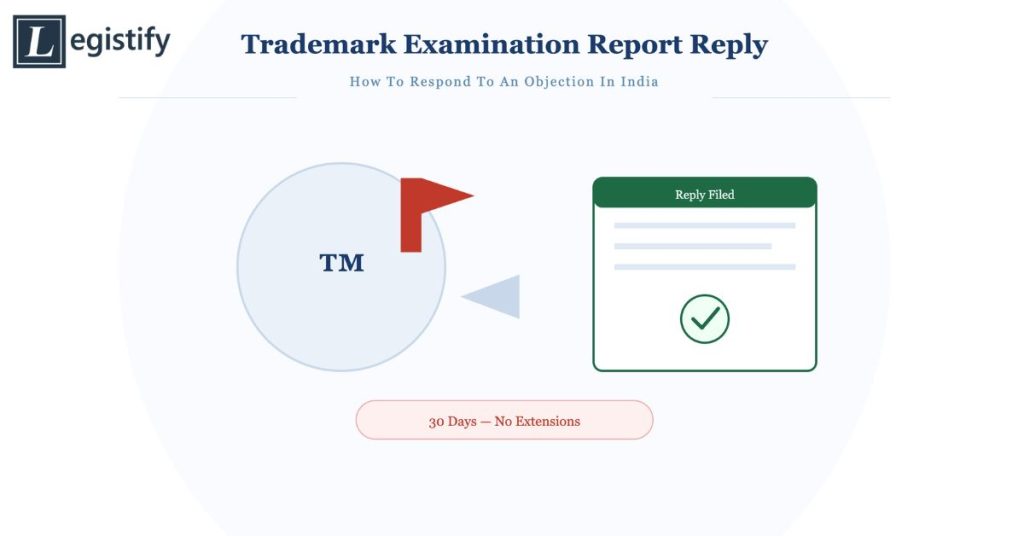
Once a trademark application is filed in India and the formalities are found in order, the Trade Marks Registry examines it and either raises no objection or issues an Examination Report. Seeing “Objected” against a trademark application understandably concerns many applicants, but an Examination Report is a routine procedural step, not a rejection. It means the examiner has specific concerns that need clarification before a decision is made on whether the mark can proceed toward registration. What makes this stage genuinely critical is the timeline: the law allows only 30 days from the date of the trademark examination report reply, with no extensions and no second chances in the ordinary course. What an Examination Report Actually Is An Examination Report is the Registry’s formal communication of objections or questions raised during the examination of a trademark application, governed by the Trade Marks Act, 1999 and administered by the Controller General of Patents, Designs and Trade Marks (CGPDTM). It does not mean the trademark has been rejected; it means the examiner is saying, in effect, “we have concerns, please explain or clarify why this trademark should be allowed to proceed.” Objections raised in an Examination Report generally fall into two broad categories. Procedural or formal objections relate to errors and omissions in the filing itself: a missing Power of Attorney, goods or services that do not correctly fall within the class applied for, or defects in the specification of goods or services. Substantive objections relate to the trademark’s actual registrability, most commonly raised under two sections of the Trade Marks Act. The Two Main Grounds for Substantive Objection Section 9 objections relate to the mark’s inherent distinctiveness. A mark may be objected to if it is considered too generic, merely descriptive of the goods or services it covers, or lacking the distinctive character needed to function as a trademark, distinguishing one trader’s goods or services from another’s. Section 11 objections relate to conflicts with existing marks. This is one of the most common reasons applications are objected to: the applied-for mark is considered too similar, in appearance or sound, to an already registered or pending trademark, creating a likelihood of confusion. Even small spelling or phonetic differences can trigger this objection; two marks that sound nearly identical when spoken aloud can be treated as conflicting even if spelled differently. The Strict 30-Day Timeline Under Rule 33(4) of the Trade Marks Rules, 2017, an applicant has one month, generally interpreted as 30 days, from receipt of the Examination Report to file a response. The registry does not send reminders. If no response is filed within the prescribed period, the Registrar may treat the application as abandoned under Section 132 of the Act, and the application effectively ceases to exist, along with whatever brand-building and filing investment was already made against it. A limited extension is available in some circumstances: applicants can request an extension of up to one month by filing Form TM-56, but this should not be relied upon as a routine buffer, since it requires a specific application and is not automatically granted. A specific timing trap worth noting: where the report is served by email, Rule 18(2) deems service at the time of sending, not at the time the applicant actually reads it. Applicants who monitor only physical post, or who do not check the email address on file regularly, risk miscalculating the 30-day window and missing the deadline without realising it had already started running. Step-by-Step: trademark examination report reply Step 1: Identify the exact grounds of objection and the deadline Read the report carefully to identify which sections the objections fall under, whether Section 9 (distinctiveness), Section 11 (conflicting marks, and if so which specific cited marks), or a procedural defect. Note the exact date of the report and calculate the 30-day deadline precisely, accounting for the deemed-service rule if the report was served electronically. Step 2: Gather supporting evidence appropriate to the specific objection For a Section 11 objection citing prior marks, this may include evidence distinguishing the applicant’s mark from the cited marks in terms of goods, services, or actual market usage, or letters of consent or coexistence agreements from the owners of the cited prior marks where such an arrangement can be reached. For a Section 9 distinctiveness objection, evidence supporting acquired distinctiveness is critical, including proof of extensive prior use, sales figures, advertising expenditure, and market recognition. Note that the Section 9(1) proviso specifically requires distinctiveness to have been acquired before the application date; relying only on use of the mark after the application was filed does not satisfy this requirement. Other supporting evidence commonly used includes copies of trademark registrations for the same mark in other countries, to demonstrate international reputation, and third-party dictionary definitions, articles, or references supporting the mark’s inherent distinctiveness. Step 3: Draft the reply addressing each ground specifically An effective reply does not simply assert that the objection is wrong; it addresses each specific ground raised with a reasoned, evidence-backed explanation. Where a Section 11 objection cites a prior mark, the reply should specifically explain why confusion is unlikely, whether due to differences in the marks themselves, differences in the goods or services covered, or differences in the target consumer base and trade channels. Step 4: File the reply through the correct channel with proper authorisation The reply is filed on the IP India online portal (ipindia.gov.in), and where the application is being handled by a trademark agent or attorney rather than the applicant directly, a Power of Attorney authorising that representative to file the reply needs to be in place and submitted correctly alongside the response. Step 5: Prepare for a show cause hearing if one is scheduled If the examiner is not satisfied with the written reply alone, the matter may proceed to a show cause hearing, where the applicant or their representative has the opportunity to make oral submissions directly addressing the examiner’s remaining concerns. Preparing for this hearing with the same rigour as
How to Reply to a Trademark Examination Report / Objection in India Read More »