In-house legal departments in India and globally are managing more work than ever. Contract volumes are up, compliance requirements are tighter, litigation portfolios are growing, and headcount has not kept pace. Legal operations software, also called a legal operations platform, closes that gap by giving legal teams a single system to manage contracts, matters, compliance, legal notices, and reporting without relying on spreadsheets and email threads.
This guide compares the 10 best legal operations software tools available in 2026, with pricing, key features, and clear best-for verdicts so you find the right fit without spending weeks on demos. Platforms built for corporate legal teams are also called legal department software, and the list covers both in-house platforms and tools built for law firms.
Quick Picks: Best Legal Operations Software at a Glance
- Best all-in-one for Indian enterprises: Legistify
- Best for contract-heavy teams: SpotDraft
- Best for in-house legal departments: LawVu
- Best for enterprise legal management: Mitratech TeamConnect
- Best for request intake management: Streamline AI
- Best affordable in-house option: Xakia
- Best for law firms: Clio
- Best for law firm billing: LeanLaw
- Best for small law firm practice management: PracticePanther
- Best for client communication: MyCase
Best Legal Operations Software in 2026
These tools are built for corporate legal departments, general counsels, and in-house legal ops teams managing contracts, matters, compliance, and legal spend.
1. Legistify
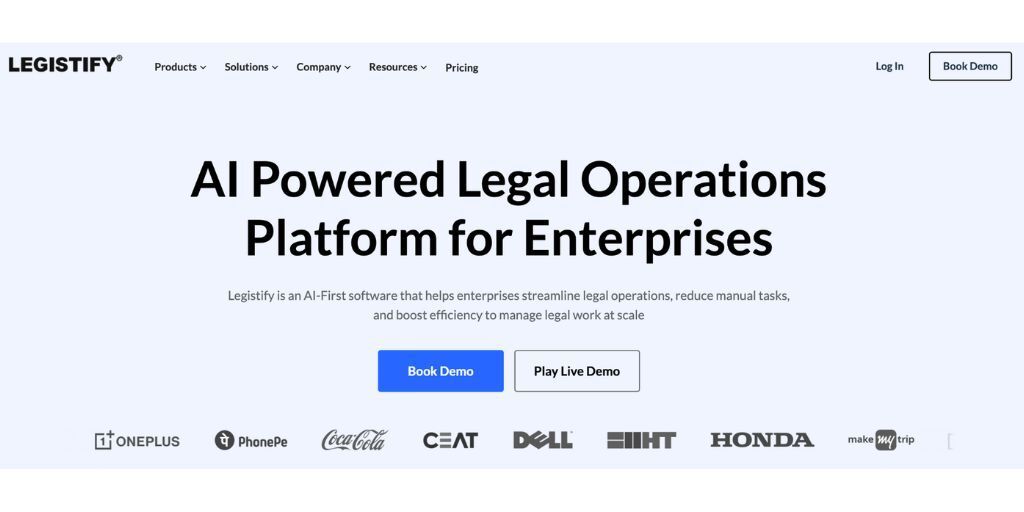
Legistify is a legal operations platform that assists the in-house legal teams in managing their work more easily with the help of AI. Legistify combines contracts, cases, compliance, and IP portfolio management into one single system, allowing teams to work faster and stay organized as they grow.
Key features:
- AI-driven contract management from drafting to signing and reporting
- Case and litigation management with alerts and updates
- Legal notice and compliance management in one place
- Document storage and collaboration in one place
- Smart analytics to help teams make better decisions
- Integration with common tools such as Slack, Salesforce, and Google Workspace
Pricing: Custom pricing. Contact the Legistify team for a demo and quote.
Pros:
- Single platform for contracts, litigation, IP, and compliance with no tool-switching
- Built specifically for Indian enterprises with local regulatory compliance in mind
- AI-driven insights that help teams shift from reactive to proactive legal management
- Strong integration with Slack, Salesforce, and Google Workspace
Cons:
- Pricing is not publicly listed, so you need a demo before comparing costs
- Best suited for mid-size to large enterprises, and often more than smaller teams need
Why it stands out:
Legistify’s LegisTrak tool replaces several unconnected tools with one solution. The AI that comes with the solution helps legal teams keep up with their work and transition from reacting to problems to proactively managing them.
Best for:
Enterprises, growing legal teams, and organizations that seek a single solution for contracts, litigation, compliance, and legal insights.
2. SpotDraft
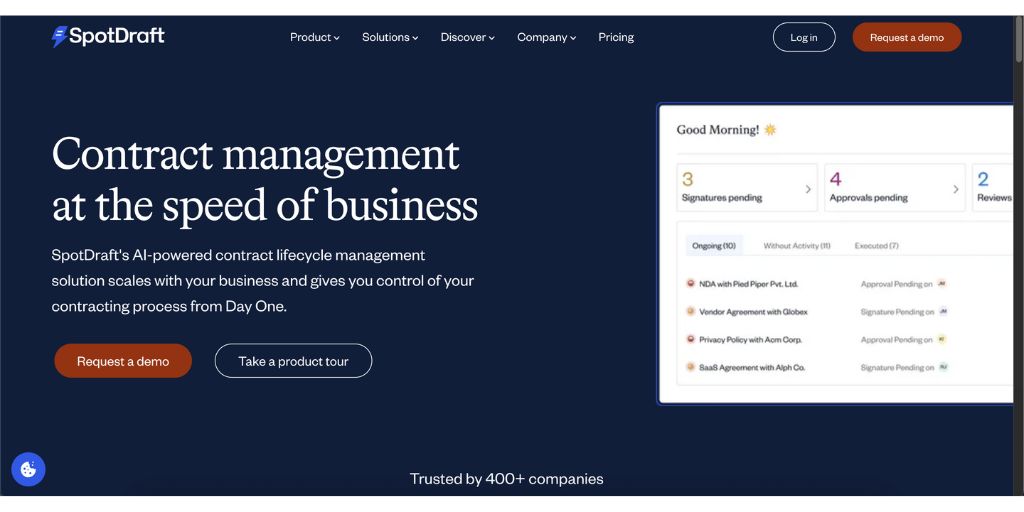
SpotDraft is an AI-based contract management solution that assists legal and business teams in managing contracts more efficiently from contract creation to contract execution.
Key features:
- AI-assisted contract drafting, templates, and approval workflows
- One place to store all contracts with secure access
- Collaboration for contract changes, negotiations, and reviews
- Contract renewal, delay, and timeline reports and insights
- Compliance-ready e-signatures
Pricing: Custom pricing. Starter plans are available, so contact SpotDraft for details.
Pros:
- Excellent AI-assisted contract drafting and review
- Strong approval workflows that reduce back-and-forth between legal and business teams
- Compliance-ready e-signatures included
Cons:
- Primarily contract-focused, so not a full legal ops suite
- Pricing can scale quickly for high contract volumes
Why it stands out:
SpotDraft is a smart assistant for contracts. It reduces manual work, accelerates approval, and applies AI to make contract processes faster and more efficient at every stage.
Best for:
In-house legal teams and businesses of all sizes who want better control, visibility, and automation of contract workflows.
3. Clio

Clio is a cloud-based software that assists law practices in organizing their daily activities from a single interface. It includes everything from client intake and case management to billing, documents, and reporting.
Key features:
- Case and matter management with all client files and deadlines organized in one place
- Time management, billing, and online payments
- Document storage, sharing, and simple automated workflows
- Client intake, CRM, and communication features
- Secure cloud access with connections to 250+ apps
- AI-powered tools for research, insights, and task automation
Pricing: From $49 per user per month (EasyStart plan, billed monthly). Higher tiers add more features.
Pros:
- One of the most widely adopted cloud-based legal platforms globally
- Covers everything from client intake to invoicing in a single system
- 250+ integrations including Outlook, Microsoft Teams, and Google Workspace
Cons:
- Built for law firms, so not the right fit for in-house corporate legal teams
- Advanced features like document automation and AI tools require higher-tier plans
Why it stands out:
Clio is one of the most recognized and respected legal software solutions globally. It is user-friendly, scalable with the growth of the firm, and integrates all legal activities on a single platform. It is particularly effective in client management and integration.
Best for:
Solo lawyers, small to medium-sized law firms, and expanding law practices seeking an all-in-one cloud-based solution for client, case, billing, and collaboration management.
4. LawVu
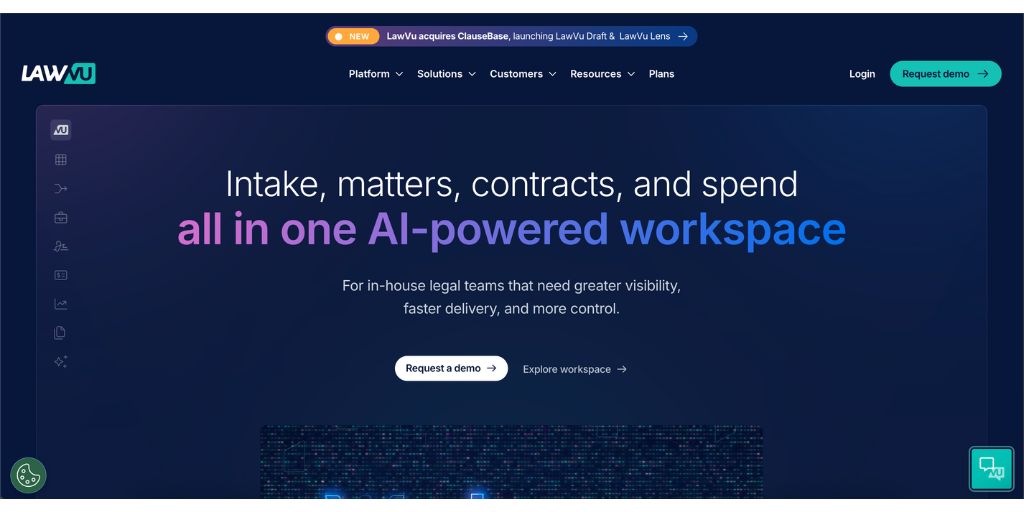
LawVu is a cloud-based legal operations platform designed for in-house legal teams. It provides teams with a single workspace to handle contracts, matters, legal spend, and reports in one place.
Key features:
- Matter management with task management, timelines, and simple-to-read dashboards
- Contract management with AI-powered workflows and self-service capabilities
- Legal spend management, including invoice analysis and external counsel management
- Reporting and analytics to measure performance, trends, and results
- Simple intake portals to capture and manage legal inquiries
- Document storage with search and knowledge-sharing capabilities
Pricing: Custom pricing for in-house legal teams. Contact LawVu for a quote.
Pros:
- Truly unified workspace for matters, contracts, and spend in one place
- Strong intake portal that removes the chaos of email-based legal requests
- Intuitive interface praised by legal ops users
Cons:
- Not primarily designed for the Indian market, so local support is limited
- Enterprise pricing may not suit smaller in-house teams
Why it stands out:
LawVu brings contracts, matters, and legal spend together in a single, secure system. Its smart automation and insights help legal teams work faster, stay organized, and make better decisions.
Best for:
In-house legal teams and corporate legal departments looking for one complete platform to manage legal work.
5. Streamline AI
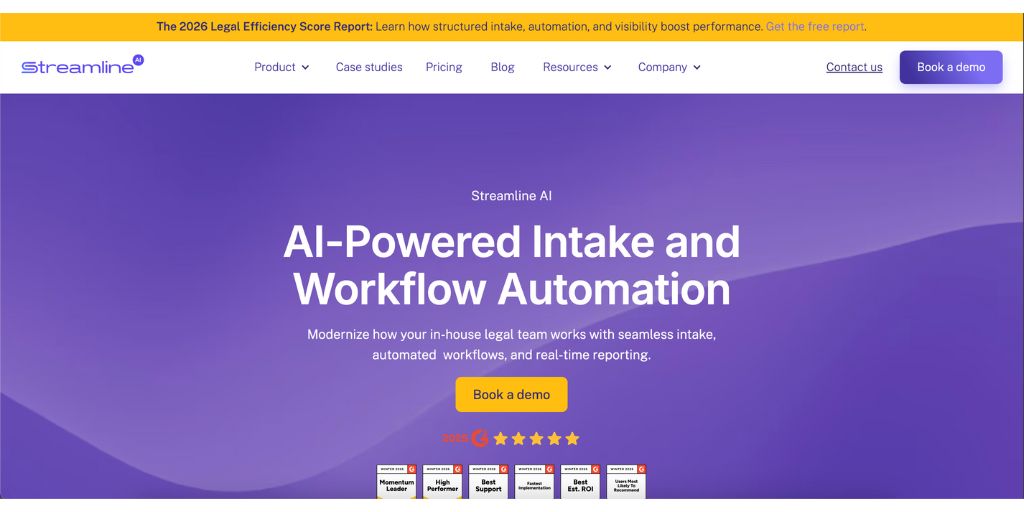
Streamline AI is a solution developed specifically for in-house legal teams to handle legal requests and workflows more efficiently. It assists teams in organizing work, tracking progress, from the initial request to its resolution.
Key features:
- Intelligent legal request intake from email, Slack, Salesforce, and more into one place
- Automated workflow using AI with no-code setup
- Tracking matters and tasks with seamless team collaboration
- Real-time reporting on request volume, workload, and delays
- Integration with existing business tools to ensure smooth request flow
Pricing: Custom pricing, enterprise-focused. Contact Streamline AI directly.
Pros:
- Solves one of the most common pain points: disorganised, email-based legal request intake
- No-code automation setup, so legal teams can configure workflows without IT
- Real-time reporting on request volumes and team workload
Cons:
- Primarily an intake and workflow tool, not a full CLM or matter management solution
- Works best as part of a broader legal tech stack rather than a standalone tool
Why it stands out:
Streamline AI is all about solving one of the most frustrating problems for legal teams: disorganized, email-based requests. The tool takes disorganized requests and turns them into organized, easily trackable processes.
Best for:
In-house legal teams that are dealing with a large number of internal requests and want to get faster, more organized, and better insights into how work is being done.
6. Mitratech TeamConnect
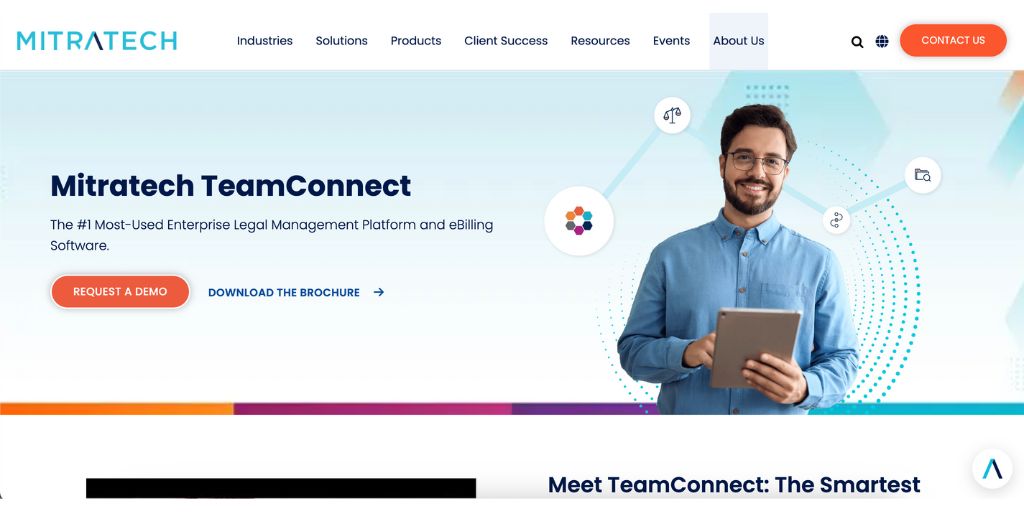
Mitratech TeamConnect is an enterprise legal management solution that assists large legal departments in organizing all their legal work in one place. It is designed to handle matters, manage legal expenses, automate tasks, and provide visibility into the performance of the legal department.
Key features:
- Matter and legal work management with customizable dashboards and templates
- Automated workflows to assign tasks, notify, and manage legal work
- Legal expense management, e-billing, and expense tracking
- Document and contract storage with advanced search functionality across all documents
- Reporting and dashboards to inform data-driven decisions
Pricing: Custom enterprise pricing based on team size and feature set. Mitratech does not publish prices, so contact Mitratech for a quote.
Pros:
- Purpose-built for large, complex legal departments with high matter and spend volumes
- Combines matter management, e-billing, and compliance in a single scalable platform
- Highly customisable dashboards and reporting
Cons:
- Significant investment, so not suited to small or mid-size legal teams
- Implementation and onboarding can take considerable time and resource
Why it stands out:
TeamConnect is intended for use in large, complex legal departments. It integrates matter management, spend management, automation, and reporting into a single scalable platform, which helps legal teams standardize processes and gain greater visibility into their operations.
Best for:
Large legal departments and enterprise legal operations teams that handle complex legal matters, high spend, and complex compliance requirements.
7. Xakia
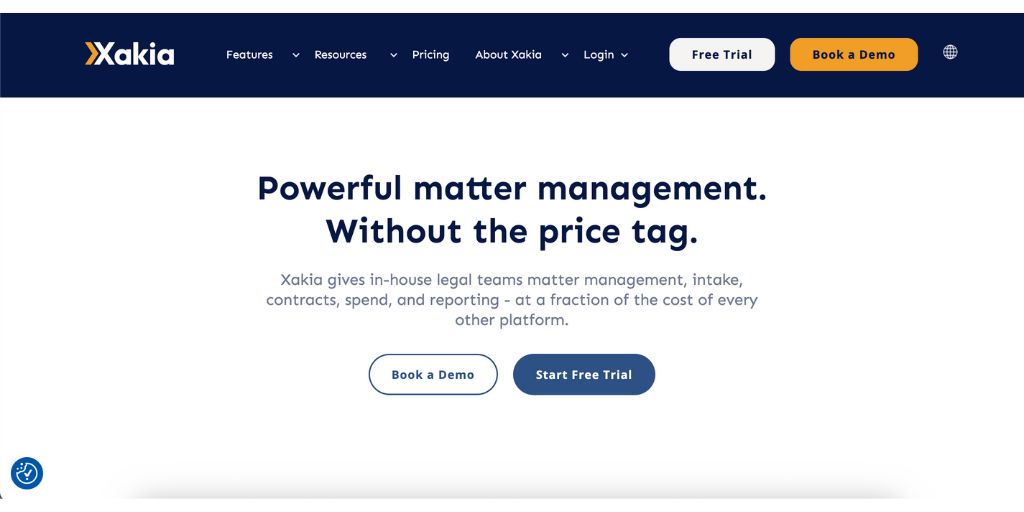
Xakia is a cloud-based legal operations platform designed specifically for in-house legal teams. The platform enables teams to keep all their legal work in one place, simplify admin, and see what’s happening across matters, requests, spend, and reports.
Key features:
- Matter management with task assignment, status updates, and notifications
- Legal request intake and workflow automation to manage incoming work
- Contract management with tracking and history, and the ability to integrate with full contract management systems
- Spend and budget tracking with simple dashboards
- Custom reporting and analytics for better decision-making
- Document storage linked to matters and legal tasks
Pricing: Tiered pricing is available. Xakia is positioned as a more accessible alternative to large enterprise ELM platforms. Contact Xakia for current plans.
Pros:
- More affordable than most enterprise legal ops tools
- Strong matter management with clean, easy-to-use reporting
- Good fit for mid-size in-house teams that do not need full enterprise ELM
Cons:
- Lighter on contract lifecycle management compared to dedicated CLM tools
- Limited availability and support in the Indian market
Why it stands out:
Xakia provides an accessible, affordable, and easy-to-use environment for legal teams. It integrates matter management, intake, expense tracking, and reporting to help teams save time, stay organized, and demonstrate their value to the business.
Best for:
In-house legal teams and corporate legal departments looking for a matter-centric legal operations platform with strong workflows, reporting, and visibility.
8. LeanLaw

LeanLaw is a cloud-based billing and accounting solution designed specifically for law firms. The software assists firms in managing time, billing, and finances in an easy manner without the need for complex systems. The software is most compatible with QuickBooks Online.
Key features:
- Simple time and expense tracking to record billable hours accurately
- Automated billing from time entry to sending invoices and receiving payments from clients
- Trust accounting features to manage client funds properly and remain compliant
- Real-time financial reporting and analysis to view profitability
- Integration with QuickBooks Online to prevent reconciliation problems
- Financial tracking at the matter level to view expenses and revenue accurately
Pricing: From $55 per user per month (Core plan), billed monthly. Requires a QuickBooks Online subscription.
Pros:
- Best-in-class billing accuracy for small to mid-sized law firms
- Tight QuickBooks Online integration eliminates reconciliation errors
- Simple trust accounting that keeps firms compliant
Cons:
- Billing and accounting focused, so not a full practice management solution
- Requires QuickBooks Online, which adds to the total cost
- Not available or supported in India
Why it stands out:
LeanLaw is all about simplifying the financial aspect of a law practice. It is ideal for practices that require accurate billing, clean accounting, and easy profitability analysis without adding complexity.
Best for:
Solo lawyers and small to medium-sized law practices seeking robust billing, accounting, and financial management capabilities without the need for full-fledged practice management software.
9. PracticePanther
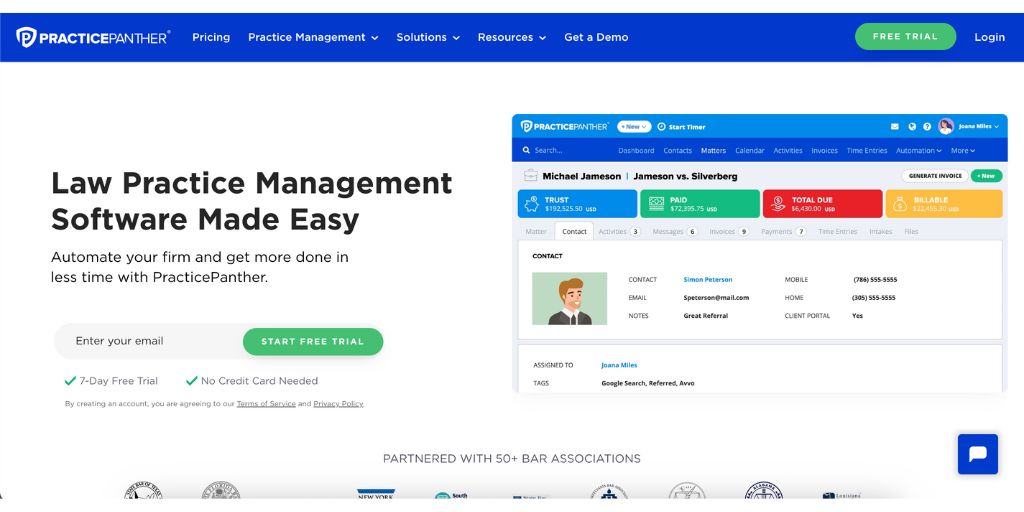
Cloud-based software PracticePanther assists law practices in managing their entire practice through a simple system. It deals with cases, clients, billing, documents, and payments. This ensures that everything is organized and easy to manage.
Key features:
- Case and matter management with secure data and deadline tracking
- Automatic time tracking, billing, and invoice generation with payments
- Document management, e-signatures, and customizable workflows
- Client communication tools and secure client portal
- Calendars, trust accounting, and easy reporting dashboards
- Access from any device, so you can work from anywhere
Pricing: From $49 per user per month. Free trial available.
Pros:
- Clean, intuitive interface that is quick to learn
- Strong client communication tools including a secure client portal
- Accessible from any device
Cons:
- Primarily suited to small and mid-sized law firms
- Less suited to complex enterprise legal operations or in-house teams
Why it stands out:
PracticePanther combines everything a law practice needs in one convenient place: cases, billing, communication, and automation. It assists law practices in reducing administrative tasks and spending more time on client matters.
Best for:
Small to mid-sized law firms and lawyers seeking an all-in-one solution for managing their day-to-day operations, billing, and client relations.
10. MyCase
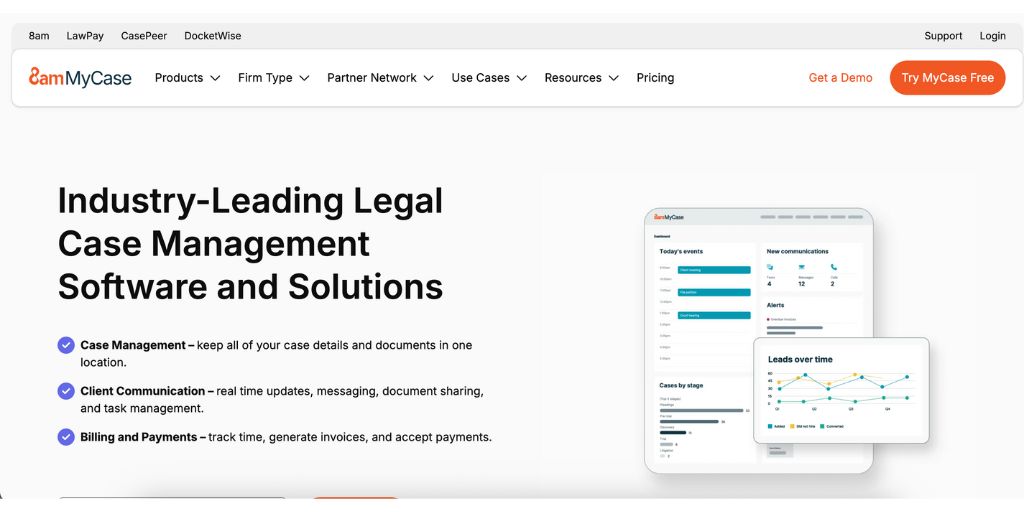
MyCase is a cloud-based practice management software that assists law firms in organizing all their cases in one place. The software integrates case management, communication with clients, billing, and documents in one simple system.
Key features:
- Case and matter management to organize files, deadlines, and documents
- Secure client portal for messaging and document exchange
- Time management, billing, invoicing, and online payments
- Online client intake forms and lead management
- Automated workflows, calendars, and performance reports
Pricing: From $49 per user per month. Free trial available.
Pros:
- Excellent client-facing features including secure messaging and a client portal
- Simple onboarding with automated workflows and intake forms
- Solid billing and payment collection tools
Cons:
- Best suited to solo lawyers and small law practices
- Limited scalability for larger or more complex legal operations
Why it stands out:
MyCase helps make running a law practice easier by integrating common tools such as cases, billing, communication, and admin work into one system. This prevents tool overload and keeps teams organized.
Best for:
Solo lawyers and small to mid-sized law practices looking for an easy-to-use, one-stop solution for running their law practice.
Best Legal Operations Software by Use Case
| Use Case |
Recommended Tools |
| Best for enterprise legal departments |
Legistify, Mitratech TeamConnect |
| Best for contract-heavy organisations |
SpotDraft, LawVu |
| Best for litigation management |
Legistify |
| Best for legal request management |
Streamline AI, Xakia |
| Best for Indian enterprises |
Legistify |
| Best all-in-one legal department platform |
Legistify, LawVu |
| Best for law firms |
Clio, PracticePanther, MyCase |
| Best for law firm billing |
LeanLaw |
Here’s a simple, easy-to-understand comparison to help you see what each tool is best at and who it’s meant for:
| Tool |
Best for |
Pricing tier |
Primary use case |
India-ready |
| Legistify |
All-in-one legal ops |
Custom |
Enterprise in-house teams |
Yes |
| SpotDraft |
Contract management |
Custom |
CLM automation |
Yes |
| LawVu |
In-house legal workspace |
Custom |
Matter + contract + spend |
Limited |
| Streamline AI |
Intake management |
Custom |
Legal request workflows |
Limited |
| Mitratech TeamConnect |
Enterprise ELM |
Custom |
Large legal departments |
Limited |
| Xakia |
Matter management |
Tiered |
Corporate in-house teams |
Limited |
| Clio |
Law firm operations |
From $49/user/mo |
Practice management |
Yes |
| LeanLaw |
Law firm billing |
From $55/user/mo |
Billing and accounting |
No |
| PracticePanther |
Small firm management |
From $49/user/mo |
Practice management |
No |
| MyCase |
Client communication |
From $49/user/mo |
Client and case management |
No |
If you are evaluating Legistify alongside other platforms, here is a quick side-by-side view of how it differs from the most commonly compared alternatives.
Legistify vs SpotDraft SpotDraft is a specialist contract management tool. It does CLM exceptionally well but does not cover litigation management, legal notice tracking, or IP portfolio management. Legistify is the better choice if your team needs one platform to manage all legal work, not just contracts.
Legistify vs LawVu LawVu is built for in-house teams and covers matters, contracts, and spend well. However, it is not designed with Indian enterprises in mind. Legistify offers the same breadth of functionality with deeper local support, Indian compliance alignment, and features like legal notice management that are specific to the Indian legal environment.
Legistify vs Mitratech TeamConnect TeamConnect is an established enterprise ELM platform, but it comes with significant cost and implementation complexity. Legistify offers comparable coverage (contracts, litigation, compliance, IP) with a faster onboarding experience and pricing that suits growing enterprises, not just large multinationals.
What Is Legal Department Software?
Legal department software is a technology platform built specifically for in-house legal teams. It brings together the core functions of a corporate legal department (contract management, matter tracking, compliance, legal notices, reporting, and external counsel management) into a single system.
It is different from standalone tools like a basic CLM or a simple matter tracker. Legal department software is designed to give the entire legal department visibility across all its work, automate repetitive processes, and help legal teams demonstrate value to the business.
How it differs from related categories:
- CLM software focuses only on contracts. Legal department software covers contracts plus litigation, compliance, notices, and more.
- Practice management software is built for law firms managing clients and billing. Legal department software is built for corporate in-house teams.
- Legal operations software is a broader term that includes both in-house and law firm tools. Legal department software refers specifically to platforms serving corporate legal departments.
Why legal departments are moving away from spreadsheets:
Most in-house legal teams still track contracts in Excel, manage litigation through email, and maintain compliance calendars manually. This approach breaks down as the volume of work grows. Legal department software replaces this with automated workflows, centralised document storage, real-time dashboards, and audit trails, giving legal teams the visibility and control they need to operate at scale.
Core Functions of Legal Department Software
When evaluating legal department software, these are the core functions to look for:
Contract Lifecycle Management (CLM): End-to-end contract management from drafting and negotiation through approval, execution, and renewal. Includes templates, clause libraries, approval workflows, and expiry alerts.
Litigation and Matter Management: Centralised tracking of all legal matters, court cases, hearings, and outcomes. Includes deadline alerts, document storage, and matter-level reporting.
Legal Notice Management: Workflow for receiving, assigning, responding to, and tracking legal notices across business units and jurisdictions.
Compliance Tracking: Monitoring of regulatory obligations, filing deadlines, and policy adherence. Includes alerts and audit trails.
External Counsel Management: Tools for managing law firm relationships, tracking matter assignments, and monitoring legal spend.
Legal Request Intake: A structured system for business teams to submit legal requests, replacing ad hoc email and messaging.
Legal Spend Management and E-billing: Invoice management, budget tracking, and spend analytics for external legal costs.
Reporting and Analytics: Dashboards and reports giving leadership visibility into workloads, timelines, costs, and team performance.
We assessed each platform across five criteria:
- Feature coverage: contract management, matter tracking, workflow automation, and reporting
- Ease of use: onboarding experience, interface quality, and user feedback
- Scalability: ability to grow with team size and increasing legal complexity
- Pricing transparency: whether plans and tiers are clearly communicated
- India relevance: in-market availability, localisation support, and fit for Indian enterprise workflows
Tools were selected based on real-world adoption, consistent user feedback, and fitness for in-house legal and law firm teams.
Why Legal Teams Are Investing in Legal Ops Software
- Keep everything in one place
Contracts, cases, and other legal documents are all in one place. This helps teams easily locate files and collaborate without having to search through emails or random folders.
- Automate everyday legal work
Request intake, approvals, follow-ups, and reminders can all be automated. This reduces manual work and saves a lot of time.
- Work faster and stay accountable
Workflows help teams see who is responsible for what. This helps teams react faster to cases and stay on track without unnecessary delays.
- See where time and money are going
Dashboards and reports provide a clear understanding of workloads, legal spend, and performance in real-time.
- Handle more work without hiring more people
Standardizing processes and increasing efficiency enable legal teams to handle growing workloads without adding more people.
How to Choose the Right Legal Operations Software
Before selecting a legal ops tool, it is essential to consider a few fundamentals to ensure that it ultimately benefits the team and users feel comfortable with the tool.
- Covers the basics
The tool should address fundamental legal work such as contract management, case/matter management, and reporting. This will eliminate the need to work with multiple tools.
- Easy to use
A clean and simple interface is a must. The tool should be friendly to use for both legal professionals and business users.
- Smart automation and AI
Automation and AI should make daily work easier like routing requests, reviewing documents, or pulling insights without making the system complicated.
- Strong security and compliance
Legal data is sensitive. The software must offer strong security, clear access controls, and meet compliance standards to keep information safe.
- Grows with your team and shows value
The right tool should scale as work increases and clearly show returns through time saved, lower costs, and better efficiency.
What to Look for in In-House Legal Software in India
Most global legal department software is built for Western enterprise workflows. Indian legal departments have specific requirements that many international platforms do not address.
When evaluating legal department software for an Indian enterprise, look for:
Court case tracking across Indian courts: The ability to track litigation across district courts, high courts, and the Supreme Court, including hearing dates, case status updates, and outcome tracking.
Legal notice management: Indian enterprises receive large volumes of legal notices across consumer, regulatory, and commercial matters. A dedicated notice management workflow is essential.
Contract execution and eSign workflows: Support for Aadhaar eSign and DSC-based signing for contracts requiring legally recognised electronic execution under Indian law. For a comparison of signing tools, see the guide to the best e-signature software.
Multi-location legal operations: The ability to manage legal work across multiple offices, business units, and geographies within India, with role-based access controls.
Managing external counsel across jurisdictions: Tools for tracking matter assignments, monitoring spend, and communicating with law firms across different states and practice areas.
India-specific compliance requirements: Support for regulatory filings, compliance calendars, and audit trails aligned with Indian regulatory frameworks including the Companies Act, the DPDP Act, and sector-specific regulations.
Most global legal department platforms do not address these requirements. This is where India-built platforms like Legistify have a significant advantage for Indian enterprises.
AI in Legal Department Software
AI is becoming one of the most important factors when selecting legal department software. Here is what AI-powered legal department tools can do today:
AI contract review: Automatically review contracts for missing clauses, unusual terms, and deviations from standard templates. Flags risks before a lawyer needs to read the full document. For a tool-by-tool comparison, see the guide to the best AI contract review software.
Clause extraction: Extract and categorise key clauses (payment terms, termination rights, liability caps, governing law) across large contract repositories.
Matter summarisation: Generate concise summaries of litigation matters, including case history, key dates, and current status, saving time on internal briefings.
Legal request automation: Route incoming legal requests to the right team member based on request type, urgency, and workload, without manual assignment.
Legal analytics: Surface trends across contracts, litigation, and compliance, such as frequently disputed clauses, high-risk counterparties, or recurring compliance gaps.
Workflow automation: Trigger approval chains, reminder notifications, and escalations automatically based on predefined rules, reducing manual follow-up.
Legal departments evaluating software in 2026 should assess not just whether a platform has AI features, but whether those features are embedded into daily workflows or bolted on as separate modules.
Conclusion
Legal operations software is designed to help legal teams do more with less: less manual work, less time chasing updates, and less reliance on spreadsheets and email threads. Whether your team is managing high volumes of contracts, tracking litigation across business units, or trying to get visibility into compliance, there is a tool in this list built for that.
If you are an in-house legal team in India looking for a single platform that covers contracts, litigation, IP, and compliance, Legistify is built specifically for that challenge. For law firms, Clio remains the most comprehensive option globally.
The best tool is the one your team will actually use, so wherever possible, run a trial or demo before committing.