To register a trademark in India, the applicant searches for the mark, files Form TM-A on the government portal, replies to any examination objections, and then goes through publication and the opposition period. An application is filed in two ways, physically at a Trade Marks Registry office or online. Online trademark registration costs less and is more convenient, so it is the method most applicants use. This guide explains how to register your trademark online, from the portal steps to fees and renewal. For a wider overview, read the guide to trademark registration in India.
How to Register a Trademark Online in India: Steps at a Glance
- Search the IP India trademark database to check that your mark is available.
- Register on the IP India portal and obtain a Class 3 digital signature certificate.
- File Form TM-A online with the mark, the class and the details of the goods or services.
- Sign the application with the digital signature and pay the fee online.
- Reply to the examination report within one month if the Registry raises objections.
- The mark is published in the Trade Marks Journal for the opposition period.
- If no opposition is filed, or the opposition fails, the Registry issues the registration certificate.
Online Registration of Trademark
- The Trade Marks Rules, 2017 set the official fee for e-filing 10% lower than the fee for physical filing. The e-filing fee is Rs 4,500 against Rs 5,000, and Rs 9,000 against Rs 10,000, per class.
- It also helps in keeping paperless records of your trademarks portfolio.
- Another huge benefit is avoiding delays which may be attributed to the physical filing of an application. The application number and filing confirmation are instantly generated.
- On a cost-benefit analysis registering your trademark has the advantage of protecting the goodwill of your business.
Process of Online Registration of Trademarks
The first step in Trademark Registration in India is to register on the Trademark Office Portal.
- Post registration the Applicant can login using the User ID or the digital signature.
- For e-filing of Trademarks, you require a valid Class 3 digital signature certificate.
- The Applicant can file a trademark application using either the new applications link for domestic applications or the IAOI (International Applications Originating from India) link for a Madrid trademark filing.
- You need to click save button after filling the details to generate a temporary application number.
- The next step is to sign the application using the digital signature.
- Pay the trademark fee online. A payment acknowledgement is generated immediately.
- The permanent application number is generated one day after the realization of the payment.
Trademark Search: A TM search reveals the presence of similar or identical trademarks and helps a person in choosing a unique trademark.
After you confirm that your chosen brand name or logo is not already listed in the Trademark Registry, you are ready to register it. The next step is to file the application at the Trade Marks Registry. Filing is mostly done online, and an official receipt is issued immediately for future reference.
You make an application for Trademark Registration on Form TM-A with the prescribed fee. The Trade Marks Registry has five offices, at Mumbai, Delhi, Kolkata, Chennai and Ahmedabad, and the office that handles your application depends on where you reside or have your principal place of business.
Responding to objections from the trademark office
After the application is filed, the Registry examines it and issues an examination report. The time taken depends on the Registry’s workload. The examiner checks whether the mark conflicts with existing registered or pending trademarks and whether it meets the requirements of Section 9 and Section 11 of the Trade Marks Act, 1999.
If the report raises objections, the applicant must reply within one month of receiving it. The reply is filed online on Form MIS-R, and the applicant also has the option to request a hearing before the Registrar. If no reply is filed in time, the Registrar is entitled to treat the application as abandoned. For a detailed walkthrough, see the guide to replying to a trademark examination report.
When the Registrar is satisfied that the objections are resolved, the application is published in the Indian Trade Marks Journal, with an endorsement stating either that it has been accepted or that it is being published before acceptance.
Advertisement in the Trademark Journal
After the application has been accepted, it is published in the Trademark Journal. The advertisement includes all details of the acceptance, including the representation of the mark, the date of filing, the particulars of the applicant, and any conditions or limitations. Any person who is aggrieved by the registration has four months from the date of the advertisement to file a notice of opposition on Form TM-O with the prescribed fee.
Handling opposition by third parties
Once the trademark has been published in the Trademark Journal, the public has a right to file a trademark opposition within four months if the registration will aggrieve them. Opposition proceedings extend the registration timeline. If an opposition is filed, the applicant must file a counter-statement within two months of receiving the notice of opposition, otherwise the application is treated as abandoned.
Most objections are avoided when they are foreseen at the time of classification and the trademark search by your service provider. This saves both cost and a lot of time in getting your trademark registered in India.
Trademark Registration
If no opposition is filed within the opposition period, or the opposition is decided in the applicant’s favour, the Registrar registers the trademark and issues the registration certificate.
Trademark Renewal
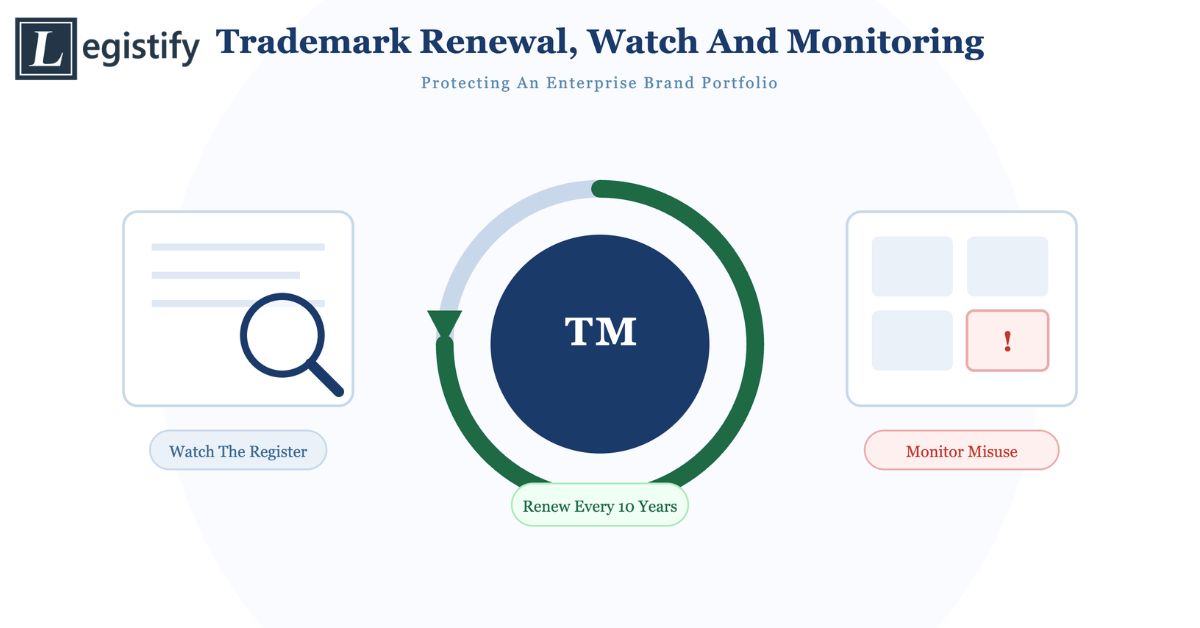
Trademark renewal is filed on Form TM-R on payment of the prescribed fee, and a registered trademark is renewed for successive periods of 10 years. Your logo or brand name stays protected for as long as you keep renewing it on time. A late renewal is accepted within six months after expiry on payment of a surcharge. If the trademark is not renewed, it is removed from the Register of Trademarks.
Trademark Registration Fees in India
The fees below are the official e-filing fees under the Trade Marks Rules, 2017. Each class needs a separate application and fee, and physical filing costs Rs 5,000 and Rs 10,000 per class for the same categories of applicant.
- Trademark application (Form TM-A) for individuals, startups and small enterprises- Rs 4,500 per class
- Trademark application (Form TM-A) for companies, LLPs and other applicants- Rs 9,000 per class
- Expedited examination [Optional]- Rs 20,000 for individuals, startups and small enterprises, and Rs 40,000 for other applicants
- Amendment to the application [for example change of address]- Rs 900
- Notice of opposition- Rs 2,700
- Counter-statement to a notice of opposition- Rs 2,700
- Request for extension of time- Rs 900
- Trademark renewal- Rs 9,000
- Late renewal within 6 months after expiry- Rs 4,500 surcharge on top of the renewal fee, which is Rs 13,500 in total
- Restoration and renewal of a trademark that has been removed from the register- Rs 18,000
Manage Your Trademark Portfolio with Legistify
Filing the application is only the first step in owning a trademark. After registration, the mark needs to be tracked through examination, publication, opposition and renewal, and it needs to be watched for similar marks filed by others. Legistify is an AI-native legal operations platform for enterprises, and its IP portfolio management suite brings trademark search, real-time tracking and analytics together in one place. It includes AI-powered trademark search, phonetic and image checks to spot possible infringement, automated alerts, and WIPO integration for managing international trademarks. Legistify Codex, the AI workspace inside the module, supports drafting IP documents, analysing a trademark portfolio and researching filing deadlines.
Conclusion
To register your trademark online in India, search the mark first, file Form TM-A on the IP India portal with the correct class and fee, and reply to any examination objection within one month. After publication in the Trade Marks Journal there is a four-month opposition period, and the Registry issues the registration certificate if no opposition is filed or the opposition fails. The registration then lasts 10 years and is renewed on Form TM-R.