India has over 50 million pending cases across its court system. For enterprise legal teams managing commercial disputes across multiple forums and jurisdictions, this scale creates an operational challenge that most organisations are not structurally equipped to handle.
The typical in-house legal team tracks litigation through spreadsheets, email threads, and occasional reminders from external counsel. This approach works at low volumes. At enterprise scale, it does not. Missed hearings, delayed responses, incomplete audit trails, and gaps in external counsel oversight are not isolated failures. They are the predictable output of a system that was never designed to handle the volume.
This blog covers the practices that separate enterprise legal teams managing litigation effectively from those that are perpetually reactive.
Centralise All Litigation Data in One Place
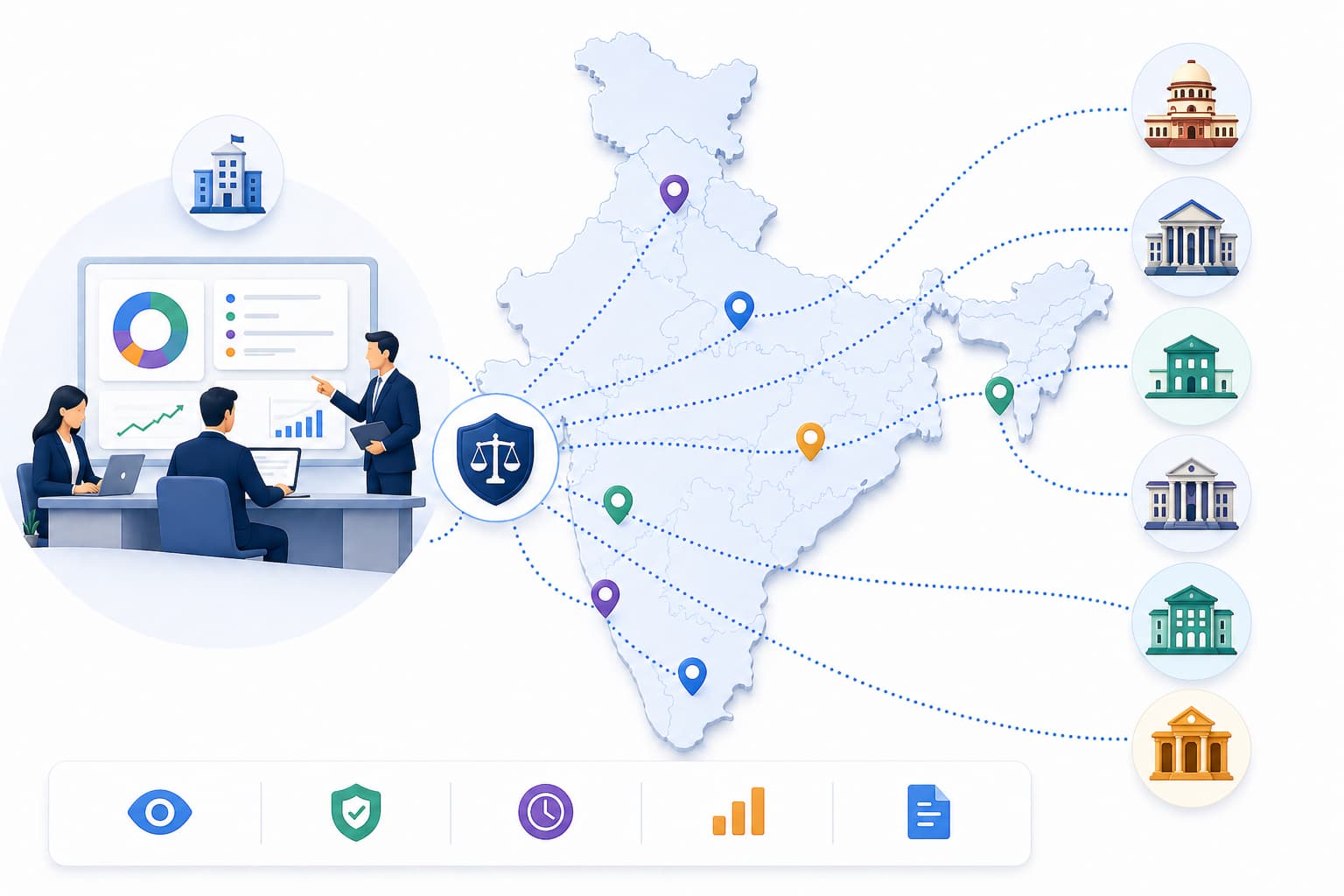
The first and most consequential change an enterprise legal team can make is to move litigation tracking out of spreadsheets and into a centralised system.
When case data lives in spreadsheets, visibility is limited to whoever maintains the file. Cases across different business units are tracked by different people in different formats. There is no single view of the organisation’s full litigation portfolio at any point in time. When leadership asks about pending exposure, someone has to compile data from multiple sources before answering.
A centralised litigation management system gives every stakeholder, including the General Counsel, business unit heads, and finance teams, a real-time view of all active cases, their current status, upcoming hearings, and associated financial exposure. Access controls ensure that sensitive case information is visible only to those who need it, without limiting the overall portfolio view for leadership.
For Indian enterprises specifically, centralisation needs to cover a wide range of forums: Supreme Court, High Courts, District Courts, the National Company Law Tribunal, consumer forums, labour tribunals, and various sector-specific regulatory bodies. A system that covers only some of these forums creates gaps in the portfolio view.
Build Automated Hearing Tracking
Missed hearings are among the most damaging and avoidable failures in litigation management. An ex parte order passed in the absence of the defendant can set a case back considerably, sometimes irreversibly. In India’s court system, where hearing dates can be updated at short notice and cause lists are published the evening before, manual tracking of upcoming dates is consistently unreliable.
Automated hearing tracking solves this directly. Systems that integrate with court databases pull hearing dates automatically as they are listed, and send alerts to the responsible team member and their escalation contacts. The legal team does not need to check cause lists manually or rely on external counsel to communicate date changes.
The key requirement for Indian enterprises is that the system covers Indian courts specifically, not just higher courts. District courts, tribunals, and consumer forums are where a large proportion of commercial litigation sits, and these need to be covered alongside the Supreme Court and High Courts.
Define Structured Workflows for New Cases
When a new case is filed against the organisation, or when the legal team initiates a matter, the steps that follow should be defined and consistent. In practice, many enterprise legal teams handle new cases ad hoc, with the response depending on who is available and how the case comes to their attention.
A structured workflow for new cases covers: how the case is logged, who is notified, how jurisdiction and forum are classified, which external counsel is assigned, what the initial response timeline is, and what documents need to be collected. When these steps are defined in advance, cases are handled consistently regardless of which team member receives them.
New case alerts are a related practice. For large enterprises with subsidiaries, group companies, and directors named in multiple matters, cases filed against the organisation are often discovered late, sometimes after an ex parte order has already been passed. Automated new case discovery, which monitors court databases for filings against named entities and directors, reduces this risk materially.
Manage External Counsel Strategically
External counsel costs are one of the largest and least visible line items in an enterprise legal budget. Most organisations have limited visibility into what they are spending across their panel of advocates, whether that spend is aligned to case outcomes, and whether the right counsel is being briefed for the right matters.
Effective external counsel management starts with structured briefing. When a matter is assigned to external counsel, the brief should include all relevant case documents, the organisation’s position, key dates, and clear instructions on reporting frequency. Ad hoc briefings over phone calls, with documents shared over WhatsApp, produce inconsistent work and make oversight difficult.
Stage-linked billing ties advocate payments to defined milestones in the case lifecycle rather than to time spent or flat fees. This creates a direct connection between payment and progress, and makes it easier to identify matters where costs are accumulating without corresponding movement.
Performance tracking over time, covering win rates, timeline adherence, and responsiveness, gives the legal team data to allocate matters to advocates based on track record rather than familiarity. For large enterprises with panel arrangements across multiple cities, this data is often the difference between an optimised external counsel strategy and one that perpetuates historical relationships regardless of performance.
Track Financial Exposure and Provisioning
Litigation has direct financial consequences. Contingent liabilities from pending cases need to be provisioned in the organisation’s accounts. Regulatory requirements, including those under the Companies Act and applicable accounting standards, require accurate disclosure of material litigation exposure.
Most enterprise legal teams do not have a structured process for calculating and communicating contingent liability to the finance function. Exposure estimates are prepared manually, often at year-end, based on incomplete case data.
A litigation management system that tracks case stage, claim amount, likelihood of adverse outcome, and historical settlement data gives the finance team a more accurate and current picture of contingent liability. Regular reporting to the CFO and audit committee on litigation exposure, covering total claims outstanding, high-risk matters, and matters approaching resolution, moves litigation from an item that finance discovers at year-end to one that is actively managed throughout the year.
Connect Litigation to Contracts and Notices
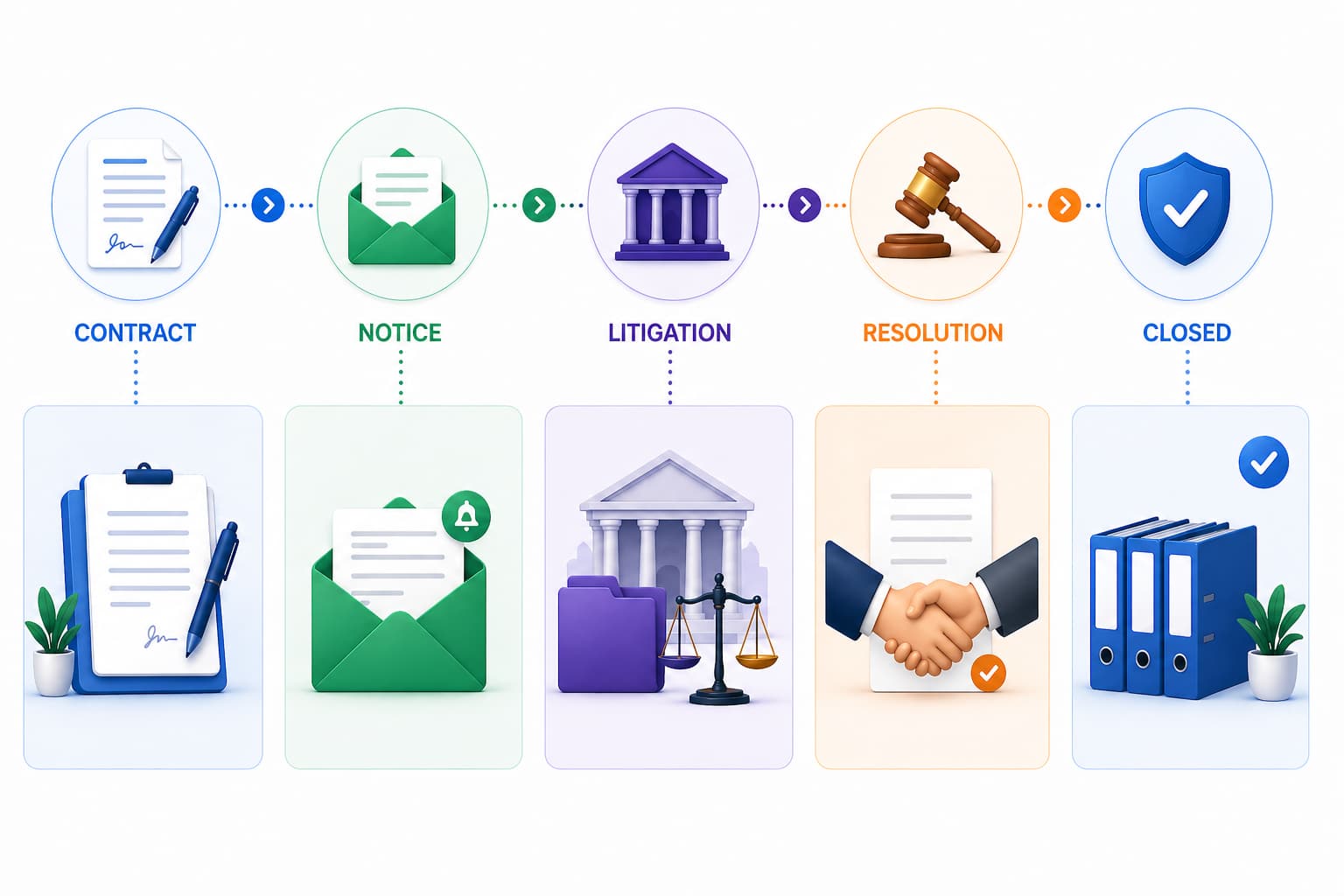
Most commercial litigation has a contract at its origin. A payment default, a delivery failure, a breach of an agreed term. These are contractual failures that escalate into legal disputes. When the litigation management system is disconnected from the contract repository, the legal team handling a dispute does not have direct access to the underlying agreement without manually locating and reviewing it.
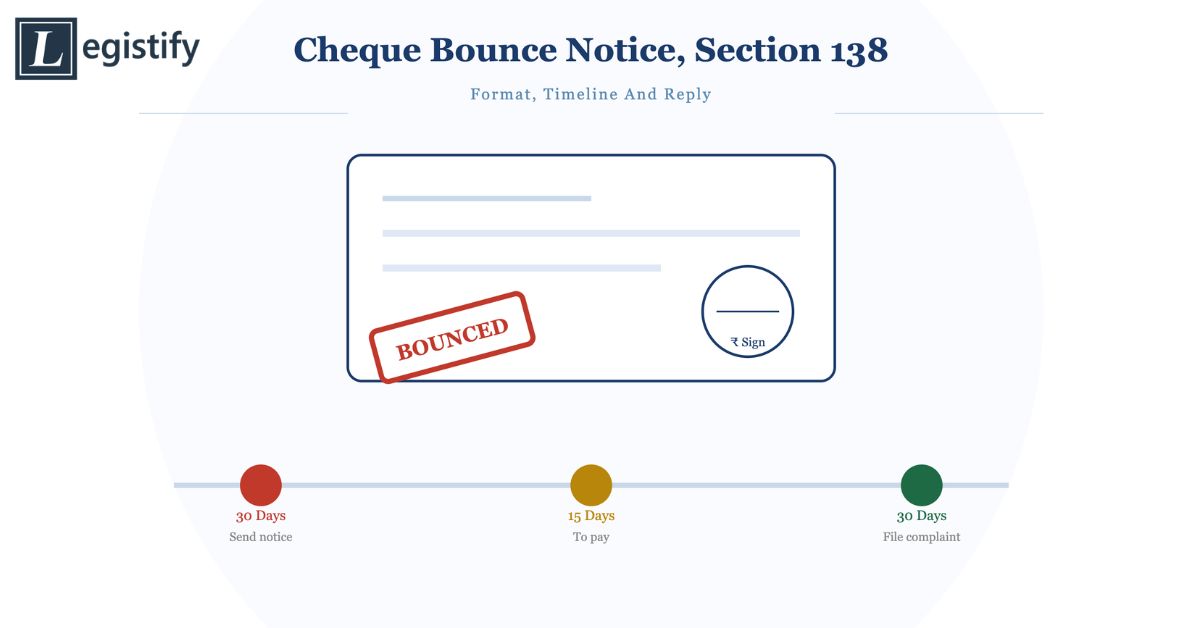
The connection between litigation and notice management is equally important. In Indian commercial law, legal notices are frequently mandatory before a suit can be filed. A Section 80 CPC notice must precede a suit against a government body. A Section 138 demand notice initiates a cheque bounce recovery process. When notice management, contract management, and litigation tracking operate in the same system, the legal team has a complete and connected record of the dispute from its origin through to resolution.
This integration is where enterprise legal teams get the most operational leverage. Instead of treating contracts, notices, and cases as separate workflows managed in separate tools, an integrated approach gives the team visibility across the full lifecycle of a dispute.
Standardise Reporting to Leadership
The General Counsel’s ability to communicate legal risk clearly to the board, the CFO, and business unit heads depends on having consistent, reliable data. In most enterprises, preparing a litigation report requires assembling data from multiple sources, reconciling different formats, and making estimates where data is incomplete. The result is a report that takes considerable effort to produce and is already partially out of date by the time it is presented.
Standardised reporting, generated directly from the litigation management system, gives leadership a current view of the portfolio without requiring manual data assembly. Key metrics for a litigation dashboard include total active matters by forum and business unit, matters approaching hearing dates, high-value claims outstanding, matters where no activity has been recorded in a defined period, and external counsel spend against budget.
When this data is available consistently, leadership conversations about litigation move from status updates to strategic decisions: which matters to settle, where to invest in stronger external counsel, and where systemic contract or compliance issues are generating disproportionate dispute volume.
Build for Audit Readiness
Enterprise legal teams face audits from internal audit functions, statutory auditors, regulatory bodies, and occasionally courts requiring production of records. Audit readiness in litigation means having a complete, accessible, and organised record of every matter: case documents, correspondence, orders and judgments, notices sent and received, hearing history, and financial transactions.
When this record exists in a centralised system with a full audit trail, producing it for a review is straightforward. When it lives across email inboxes, shared drives, and individual file systems, reconstruction is time-consuming and the risk of gaps is high.
The practical standard for audit readiness is that any case in the portfolio should be fully reconstructible from the system’s records, without relying on the memory or files of the individual who managed it. For enterprises with high advocate and team turnover, this continuity is particularly valuable.
Conclusion
Enterprise litigation management is not primarily a legal challenge. It is an operational one. The legal analysis and advocacy are functions of the lawyers involved. The infrastructure that supports them, how cases are tracked, how hearings are monitored, how counsel is managed, how exposure is reported, and how disputes connect to the contracts and notices that preceded them, is an operational design question.
The enterprises that build structured litigation management practices operate with a clear advantage in terms of cost control, risk visibility, and responsiveness. Those that continue to manage high volumes of litigation through spreadsheets and informal tracking are carrying operational risk that accumulates quietly until it surfaces in a missed hearing, an unexpected ex parte order, or an audit that reveals an incomplete record.
Legistify’s litigation management module is built for the Indian court system, covering automated case updates, new case alerts, external counsel management, and integration with contract and notice management, so that enterprise legal teams have a connected view of their full legal operations in one place.