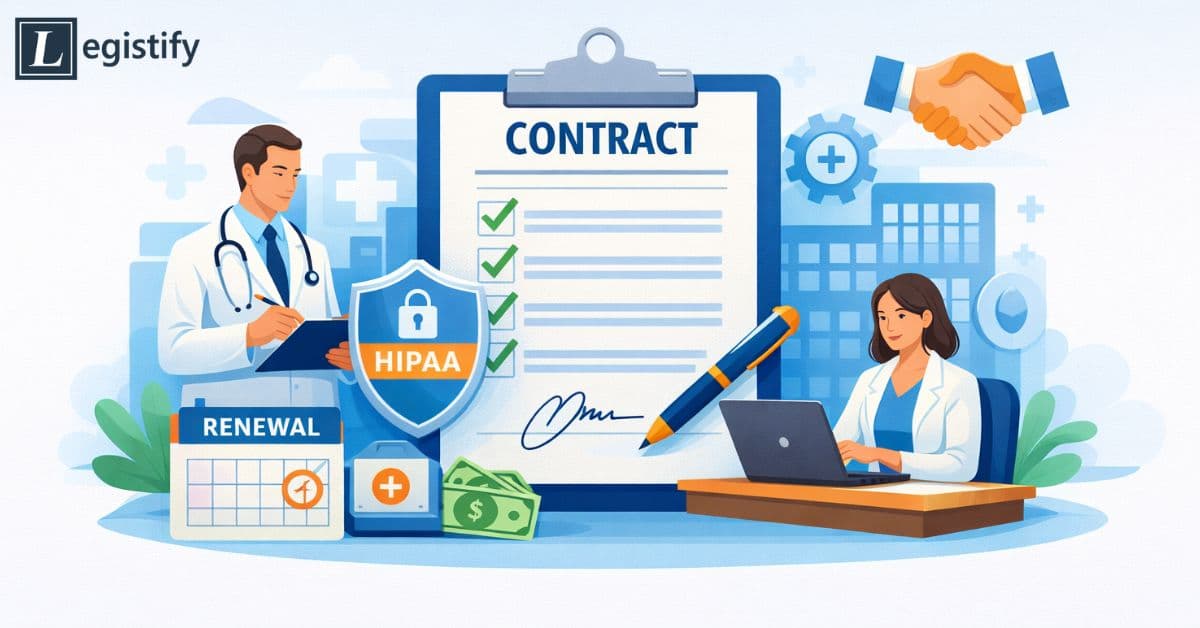
Healthcare organisations are involved in a number of contracts with physicians, vendors, and insurance providers. These contracts are important and impact various operations of a healthcare organisation.
Healthcare contract management is a process that helps in managing all phases of a contract, from creating and negotiating a contract to tracking and renewing it. With the increase in regulations and contracts, it is important to implement a structured process of contract management to ensure compliance and efficient operations.
What is Healthcare Contract Management?
Healthcare contract management is a process that involves managing all contracts that are in place between a healthcare organisation and its stakeholders throughout their lifecycle. The lifecycle of a contract involves creating, reviewing, approving, executing, monitoring, and renewing or terminating a contract.
Unlike most businesses, a healthcare business is required to adhere to a number of strict laws and regulations regarding contracts. HIPAA, Stark Law, and Anti-Kickback laws require that all contracts are structured in a way that is beneficial to all parties involved in a healthcare business.
A healthcare business is usually involved in many contracts with various stakeholders in the business, such as insurance companies, doctors, equipment vendors, and technology vendors. Managing all these stakeholders requires a lot of coordination and cooperation from all departments involved in a healthcare business.
A healthcare business can benefit in many ways from a well-managed contract. Many healthcare businesses are currently using a tool known as a Contract Lifecycle Management (CLM) tool to help them manage all their contracts. With this tool, a business can reduce costs and also ensure that all contracts are executed and monitored properly.
Key Stages of the Healthcare Contract Lifecycle
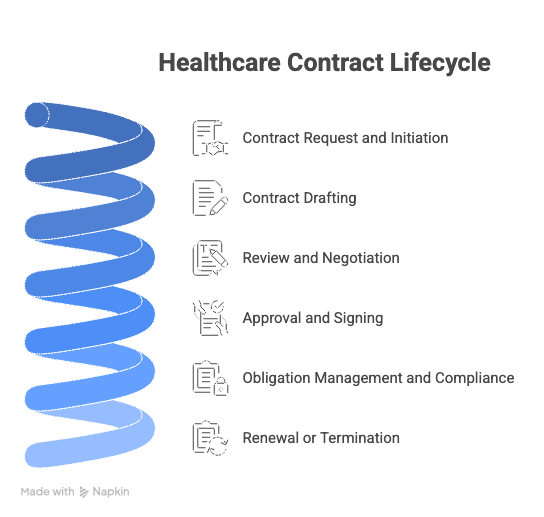
Healthcare contracts are subject to a well-defined lifecycle process that ensures contracts are properly generated, approved, and managed. All these steps are critical and contribute to the achievement of the operational objectives and regulatory compliance.
1. Contract Request and Initiation
The lifecycle process commences when the department recognises the need for a contract. In healthcare, for example, a hospital may want to acquire medical equipment, recruit physicians, partner with a diagnostic lab, or work with an insurance company.
During this stage, the objectives and scope of the contract are determined. Some of the critical factors are identified and documented. These factors include the deliverables, milestones, performance, and financial terms. These factors are determined at the outset to ensure that the contract meets the operational needs.
Accurate documentation is critical during the initiation stage to prevent potential misunderstandings during the process.
2. Contract Drafting
After the approval of the contract request, the drafting process is undertaken by either the legal or procurement department. The drafting process involves the use of standardised templates and customised clauses that suit the nature of the partnership.
In healthcare contracts, there are often provisions regarding the protection of patient information, regulatory compliance, performance, and payment structures. Since healthcare is a highly regulated sector, the legal department scrutinises the contract to ensure that all the provisions comply with the relevant laws.
Using standardised templates for drafting contracts is very beneficial to the organisation because it helps speed up the process.
3. Review and Negotiation
Once the initial draft has been created, the contract enters the review and negotiation phase. This process requires collaboration between several different stakeholders, including legal, financial, procurement, and operations teams.
During this process, both sides of the contract negotiate and discuss several different contract elements, including pricing structures, service-level agreements, liabilities, reimbursement structures, and contract terminations. Financial structures are often discussed during contract negotiations in healthcare contracts.
Since healthcare contracts often involve several different stakeholders, the negotiation process can take some time to complete. A good workflow can help speed up this process and make it easier to collaborate.
4. Approval and Signing
Once all parties agree to the terms of the contract, it is then ready for the approval process. Here, the approved personnel within the organisation will approve the final version of the contract before it is executed.
Traditionally, approvals were done through routing and signatures. This was often a tedious process. Currently, many healthcare organisations use technology to speed up the process through electronic signatures.
Automated approval systems help in ensuring that all stakeholders involved in the contract are reached in good time and that all approvals are obtained before execution. Electronic signatures help in hastening the process since no paperwork is involved.
5. Obligation Management and Compliance
Once the contract has been executed, it is essential for the organisation to monitor the contract to ensure that both parties are complying with their obligations. This is the stage where the organisation has to monitor the key obligations, deadlines, and performance metrics of the contract.
For instance, healthcare organisations may have to monitor service levels, equipment maintenance, or insurance reimbursement. This helps to ensure that the obligations are met, thus maintaining business continuity and avoiding any future conflicts.
Compliance monitoring is another essential factor of this stage. Healthcare organisations must ensure that the activities of the contract are compliant with the regulations and policies of the organisation.
Contract management systems may include contract management dashboards, contract management reports, and contract management alerts to help the organisation effectively monitor the contract.
6. Renewal or Termination
Eventually, every contract comes to the end of its lifecycle. When the expiration dates of these contracts are nearing, it is essential to determine whether the contract should be renewed, renegotiated, or terminated.
The process of determining this may involve assessing the vendor’s performance, financial results, and whether the partnership is still beneficial to the strategic objectives of the organisation.
The renewal alerts are essential in this process, as they help in notifying the organisation about the impending renewal dates. This is essential to avoid situations where contracts are renewed automatically, leading to unfavourable terms for the organisation.
Renewal management is essential for healthcare organisations to build successful partnerships while continually improving their contracts.
Types of Healthcare Contracts
Healthcare organisations deal with various forms of contracts, each of which supports the operations of various functions. Each contract has its own unique purpose and set of stakeholders.
- Vendor Supply and Service Contracts
Hospitals and healthcare providers use many vendors to obtain the supplies, equipment, and services they need to operate their facilities. Vendor contracts are those contracts used to obtain supplies and services such as diagnostic machines, pharmaceutical products, information technology supplies, laboratory equipment, and facilities management supplies.
Vendor contracts usually include pricing models, delivery schedules, and service levels, as well as any applicable warranties. Because the reliability of the equipment can impact the quality of patient care, vendor contracts usually include detailed service level agreements to ensure timely vendor response and maintenance.
- Physician Employment Contracts
Physician employment contracts are those contracts used to manage the relationships between healthcare organisations and physicians. Physician employment contracts usually include the terms and conditions of the compensation structure, work schedules, and responsibilities.
Physician recruitment contracts may include incentives such as moving expenses, signing bonuses, and productivity-based pay. Physician employment contracts can be useful in helping the organisation comply with various government regulations regarding financial relationships with physicians and medical professionals.
- Payer-Provider Agreements
Payer provider agreement is a type of agreement that is signed between a provider and an insurance company. Agreements are signed in order to determine the rates and billing methods.
Since these contracts are involved in the reimbursement of healthcare services, they are of significant value to a provider’s financial performance. Effective management of these contracts is important in order to ensure that insurance providers are paying in accordance with the agreement.
- Confidentiality and Non-Disclosure Agreements
Healthcare organisations are involved in handling confidential information, such as patient information, research results, and business information. Confidentiality and non-disclosure contracts are important in protecting this information.
These contracts are important in order to determine how confidential information is handled and shared. These contracts are important when a healthcare organisation is involved in a partnership or a collaboration with a party that requires this information.
Having strong confidentiality and non-disclosure contracts is important in protecting patient information and in order to abide by patient confidentiality laws.
Why Healthcare Contract Management is Important
Healthcare contract management is instrumental to various organisational objectives that play a critical role in determining success.
- Regulatory Compliance
Regulatory laws in healthcare organisations focus on providing protection to patients and promoting ethical business practices. Contract management ensures that all contracts comply with regulations and laws.
- Financial Performance
Financial terms of a contract determine payment terms and pricing structures. Contract management ensures that all financial aspects of an organisation are properly managed to avoid losses through leakage.
- Operational Efficiency
Contract management promotes efficient communication among various departments of an organisation through centralised information storage. This facilitates prompt response to operational needs.
- Risk Mitigation
Well-defined contracts and monitoring minimise the risks of disputes, violations, and penalties.
Common Challenges in Healthcare Contract Management
However, despite its significant value, it is not easy to implement a healthcare contract management process.
- Regulatory Complexity
Regulations in the healthcare sector are constantly changing, and it is not easy to comply with them. It is important to update contracts to ensure that they are in compliance with changing regulations.
- High Contract Volume
Healthcare institutions are involved in a large number of contracts, and it is not easy to manage all of them.
- Limited Visibility
When contracts are in multiple systems, it is not easy to have visibility into them. Without a centralised contract management process, it is not easy to manage contracts.
- Financial Leakage
Ineffective contract management often leads to lost reimbursements and revenue potential.
Best Practices for Effective Healthcare Contract Management
Healthcare organisations can also improve their contract management process through the implementation of effective strategies and technology.
- Use a Centralised Contract Repository
Using a centralised contract repository helps healthcare organisations store all their contracts in one location. This ensures that all teams are working with the most updated version of the contract.
- Implement Automated Alerts
Automated alerts help healthcare organisations stay on top of critical milestones such as renewals, compliance, and performance reviews.
- Conduct Regular Contract Audits
Regularly reviewing contracts helps healthcare organisations stay on top of compliance, performance, and potential renegotiation.
- Use Standardised Templates
Standardised templates are useful for organisations in drafting contracts in a simplified way, ensuring all legal requirements are covered.
The Role of Technology in Healthcare Contract Management
Technology is changing the way healthcare organisations manage contracts. This is because Contract Lifecycle Management platforms offer organisations tools for centralising contracts, automating processes, and monitoring performance metrics.
This helps organisations to monitor their contracts, analyse contracts, and have a better view of contracts. This is achieved by using automation to reduce manual processes and increase accuracy.
Additionally, modern CLM tools use artificial intelligence to analyse contracts, identify risks, and extract critical clauses. This helps organisations to make better decisions and strategically manage contracts.
Conclusion
Healthcare contract management is important in that it helps an organisation to remain compliant, manage financial relationships, and facilitate smooth collaboration with vendors, insurance companies, and medical practitioners. With this in mind, it is possible to ensure that there is increased efficiency and control in a healthcare setting.