Contracts are an important part of an enterprise’s daily operations and must be precise, comprehensive, and legally binding. They act as the foundation of legal agreements and operational frameworks, and Contract Lifecycle Management (CLM) tools have become essential to managing them. Among the many features that improve CLM effectiveness, contract templates stand out. This article covers the importance of contract templates, how they simplify the contract management process, ensure consistency, and contribute to operational efficiency.
What is a Contract Template?
A contract template is a pre-designed set of standardised clauses and terms intended for specific types of contracts or transactions. These templates simplify the contract drafting process, allowing contract authors to create a contract quickly by adding the necessary details and modifying clauses to suit their particular engagement.
By using these templates, enterprises can ensure their contracts are comprehensive and legally compliant while saving valuable time and effort. Templates can be customised to include specific provisions and requirements, making them a versatile tool for enterprises of all sizes and industries. Contract templates are particularly valuable for enterprises managing bulk contracts, since they simplify drafting and negotiating agreements that are similar in nature across multiple relationships.
Most Common Types of Contract Templates
Enterprises use several types of contracts repeatedly to define the terms and conditions of their agreements with other parties. Some of the commonly used contract templates include:
- Non-disclosure agreements (NDAs) are commonly used to protect a business’s intellectual property. These agreements are made between two or more parties when discussing or sharing confidential materials.
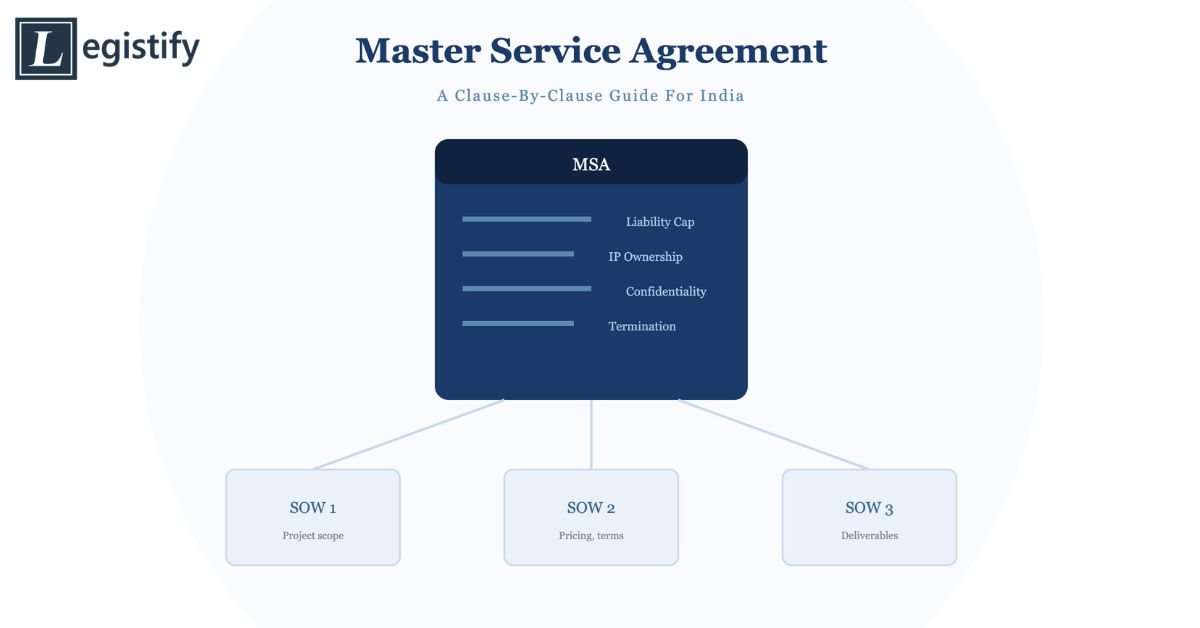
- Master services agreements (MSAs) are used to facilitate future business between two parties. These agreements typically govern the terms and conditions of current and future relationships.
- Partnership agreements define the roles and obligations of each party involved in a partnership. These agreements can cover capital contributions, profit and loss distribution, or ownership interest.
- Employment contracts define the relationship between an employee and an employer. This is one of the most common types of contracts.
- Rent agreements can cover everything from equipment to property. These agreements set out the exact terms and conditions, including monthly costs, deposits, maintenance terms, and duty of care.
When a business deals with external entities, it may require additional contract types to keep operations running smoothly. These may include service-level agreements (SLAs), which outline the level of service the external entity is expected to provide; contractor agreements, which specify the terms for hiring a contractor; and custom contracts, tailored to the specific needs of the business. Having a library of contract templates in place means enterprises do not need to create the same contract repeatedly, letting legal teams focus on more substantive legal matters.
Challenges in Manual Contract Templates
Legal teams typically keep a set of templates for commonly used contract types. However, these templates are often managed across various systems such as shared drives and spreadsheets, leading to several challenges:
- Difficulty locating contract templates since they are not stored in a central location.
- Periodic checks for outdated clause language become cumbersome.
- Multiple versions of templates get created due to unrestricted access permissions.
- Tracking language deviations from standard contract language is difficult.
These inefficiencies lead to errors, put contracts at risk, and can negatively affect business performance. Poorly drafted contracts can result in costly litigation, damaged relationships, and reputational harm.
To address these challenges, enterprises can adopt a contract lifecycle management solution that helps create and manage contract templates efficiently, speeds up contract authoring, and improves overall performance. An AI-based CLM solution provides predefined templates and a clause library with standard language, enabling teams to reuse them quickly and consistently. Centralised templates and clause libraries also support scalability, allowing contract owners to create customised contract types as needed.
Contract Template Benefits: Why Should You Consider Using Them?
1. Faster Contract Preparation
Keeping standard contract templates for commonly requested contract types in a central location saves time and effort by avoiding the need to create a new contract from scratch each time. Pre-existing templates help contract owners quickly fill in the necessary details, adjust relevant clauses, and produce a contract suited to their current engagement. Standard templates and self-service options speed up contract creation and reduce the likelihood of errors and operating costs. The main advantage of managing templates in a CLM system is controlled access permission, ensuring the enterprise’s template library remains the only accepted source for legally approved language.
2. Consistency and Compliance in Contracts
Maintaining consistency across various agreements is one of the persistent challenges in contract management. Contract templates in a CLM platform act as a safeguard against inconsistency by enforcing standardised language, terms, and clauses. This ensures consistency within individual contracts and aligns all agreements with legal and regulatory requirements, helping enterprises avoid legal issues and contractual disputes by embedding compliance measures directly into templates.
3. Contract Customisation
Standardisation is essential in contract creation, but flexibility to customise contracts for specific needs is equally important. Good contract templates balance standardisation and customisation by allowing users to edit clauses, terms, and conditions while still adhering to organisational standards. This ensures each contract stays relevant to the particular transaction or relationship, making it more effective and efficient.
4. Contract Version Control
Version control becomes increasingly important as contracts go through revisions and updates. CLM tools that incorporate contract templates offer version control, tracking changes and creating a clear audit trail. This allows legal teams to collaborate more effectively while maintaining a historical record of all changes made to a contract. A CLM tool manages and organises these versions automatically, so users can collaborate on drafts without losing track of changes.
5. Reduced Legal Costs
Other departments, such as sales or marketing, may need to modify a contract draft based on the nature of a deal. A central library of legally approved clause language helps users without legal expertise create acceptable contracts, reducing the need for legal assistance and freeing legal teams to focus on more important work.
6. Easy Implementation of Pan-Company Policy Updates
Policy and regulatory requirements change frequently, and updates often require modifications to clause language across multiple contracts within an organisation. A CLM solution’s templates and clause library help enterprises quickly assess the impact of these changes and make the necessary updates to affected language.
7. Faster Contract Approval Process
Optimising the contract approval process supports faster revenue recognition and improved cash collection. An automated CLM solution with templates can be used to build an approval process customised to contract type, department, employee, amount, and language. Contract management software can identify deviations from corporate policy using redlining technology, which can then be resolved through alternative language suggestions or further negotiation.
8. Improved Contract Negotiations
Contract template-based negotiation gives enterprises a consistent approach to negotiations. AI contract management software improves the negotiation process by identifying deviations from the standard template when changes are needed. Pre-approved alternative language can be inserted into the template without requiring additional management approval, speeding up negotiation and reducing manual intervention and risk.
9. Better Contract Compliance
Contract compliance extends beyond contract obligations to broader regulatory requirements, and non-compliance can lead to substantial penalties and reputational damage. An automated system ensures the templates in use are the versions approved by the legal team, eliminating the risk of employees using outdated templates. The software can also flag changes made to specific provisions for review and risk categorisation, and provide real-time reporting on contract deviations or obligations that carry risk for the organisation.
Conclusion
Contract templates, especially when managed within a CLM platform, simplify contract creation while ensuring consistency, customisation, and compliance, contributing meaningfully to operational efficiency. CLM tools with strong contract template capabilities are becoming a practical requirement for enterprises managing contracts at scale. LegisTrak provides a wide range of AI-powered contract templates, an extensive clause library, and the ability to create custom contract templates as needed, along with document repository, real-time collaboration, and task management functionality.