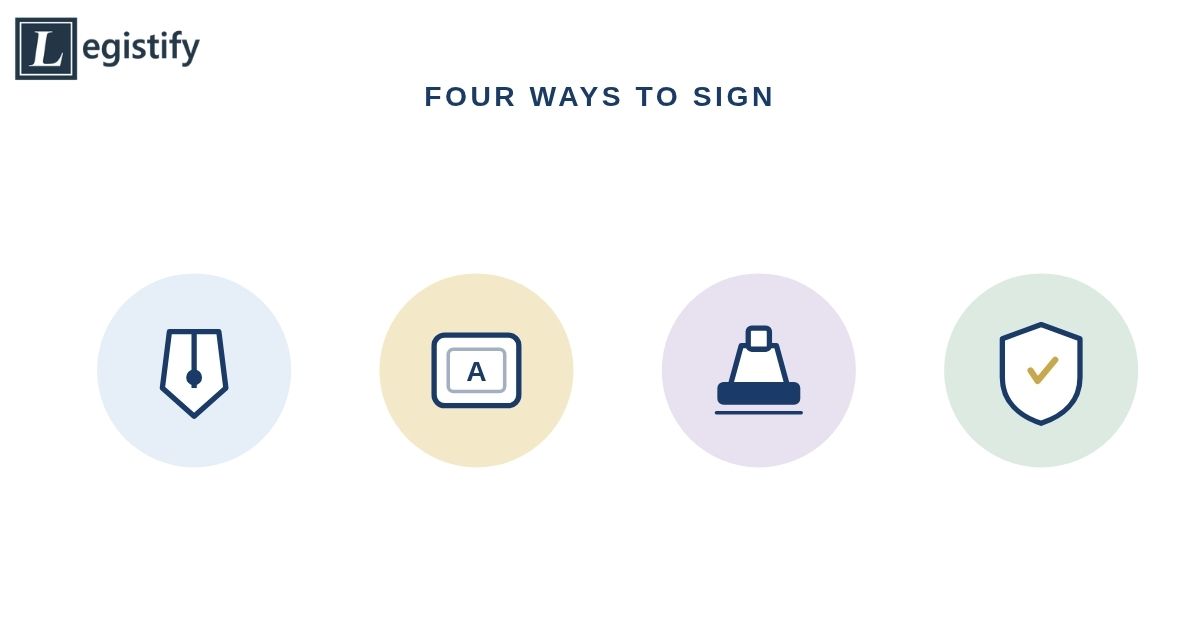
Signing a document today can mean picking up a pen, typing your name into a field, applying a rubber stamp, or authenticating with a cryptographically secured digital signature. Each of these methods has a different history, a different level of legal weight, and a different appropriate use case. Understanding the difference helps you choose the right signing method for the document in front of you, rather than defaulting to whatever is most familiar.
Wet Signature
A wet signature is a handwritten signature applied to a physical document using a pen. It is called “wet” because the ink is literally wet at the moment of signing. This is the oldest and most familiar form of signature, and it has been the default method of authenticating documents for centuries.
Strengths: Wet signatures are universally recognised and require no technology. They are still required by law for specific document categories in India: documents requiring registration under the Registration Act (sale deeds, mortgage deeds), wills, negotiable instruments in physical form, and certain court filings.
Weaknesses: A wet signature can be forged relatively easily, and proving forgery or authenticity typically requires handwriting expert testimony or comparison with known specimens, which is expensive and time-consuming. A wet signature also provides no inherent protection against a document being altered after signing; if pages are swapped or content is changed, the signature itself does not reveal this.
When to use it: For documents where Indian law specifically requires physical execution, including property transfer deeds, wills, and specific court documents, wet ink signatures remain mandatory. For other documents, wet signatures are increasingly a matter of preference or institutional habit rather than legal necessity.
Typed Signature
A typed signature is simply your name typed into a signature field, often in a script-style font to visually resemble handwriting. It is one of the simplest forms of electronic signature and is commonly used in low-risk online transactions: agreeing to app terms, confirming a low-value order, or signing an internal document through a basic form.
Strengths: Typed signatures are fast, require no special equipment, and are broadly accepted for low-stakes agreements. Under the IT Act, 2000, a typed name applied with the intent to sign can constitute a valid electronic signature for many purposes.
Weaknesses: A typed signature offers essentially no identity verification. Anyone with access to a form can type any name into it. Its evidentiary value in a dispute depends almost entirely on the surrounding context: the audit trail showing who accessed the platform, from what device, and at what time, rather than on the signature itself.
When to use it: Typed signatures are appropriate for low-risk agreements where the identity of the signatory is not seriously in question and the consequences of a dispute are minor. They are not appropriate for high-value contracts, agreements with unfamiliar counterparties, or documents that may need to be enforced in litigation.
Stamped Signature
A stamped signature uses a rubber stamp or similar physical device to reproduce a signature or an official mark on a document, rather than requiring the signatory to sign by hand each time. Stamps are commonly used in institutional and corporate contexts, particularly in India, where a company seal or an authorised signatory stamp is affixed alongside or instead of an individual signature.
Is a stamp the same as a signature? A stamp can function like a signature in specific business contexts, particularly where it is a controlled, officially recognised mark used consistently by an authorised person. Whether a stamped signature is treated the same as a handwritten signature depends on the specific law, the industry practice, and the internal authorisation rules of the organisation using it.
Strengths: Stamps are efficient for high-volume, repetitive signing tasks, such as issuing large numbers of certificates, invoices, or standard notices. They also serve an important institutional function in India, where a company’s common seal historically carried specific legal significance for certain types of corporate documents.
Weaknesses: A stamp carries even weaker individual identity verification than a typed signature, since a stamp can be used by anyone who has physical access to it, not necessarily the person it represents. Stamps are also vulnerable to misuse if not properly controlled and secured within an organisation.
When to use it: Stamps are appropriate for high-volume institutional documents where individual signatory verification is less critical than the document being issued by an authorised entity. For contracts, high-value agreements, or any document requiring individual accountability, a stamp alone is generally not an adequate substitute for a proper signature.
Digital Signature
A digital signature is a cryptographically secured signature created using public key infrastructure (PKI). In India, digital signatures are implemented through Digital Signature Certificates (DSCs) issued by Certifying Authorities licensed by the Controller of Certifying Authorities under the IT Act, 2000.
Strengths: Digital signatures provide the highest level of security among all signature types. They verify the signatory’s identity through a certificate-based process and create a tamper-evident seal: if the document is altered after signing, the signature becomes invalid on verification. This makes forgery and undetected alteration extremely difficult compared to wet, typed, or stamped signatures.
Weaknesses: Digital signatures require the signatory to obtain a DSC in advance, which involves an identity verification process and, for USB token-based certificates, physical hardware. This makes them less convenient for one-off or low-value transactions compared to simpler electronic signature methods.
When to use it: Digital signatures are required for specific regulatory filings in India, including MCA/ROC filings, GST returns, and income tax filings above certain thresholds. They are also recommended for high-value commercial contracts, agreements with significant legal or financial consequences, and any document where the parties want the strongest possible protection against future disputes about authenticity or alteration.
Comparing All Four: A Quick Reference
| Signature Type |
Identity Verification |
Tamper Detection |
Typical Use Case |
Legal Weight in India |
| Wet Signature |
Weak (relies on visual comparison) |
None inherent |
Property deeds, wills, court filings |
High, and mandatory for specific documents |
| Typed Signature |
Very weak |
None |
Low-risk online agreements |
Valid but weak evidentiary value |
| Stamped Signature |
Weak (depends on stamp control) |
None |
High-volume institutional documents |
Context-dependent |
| Digital Signature (DSC) |
Strong (CA-verified) |
Built-in cryptographic protection |
Regulatory filings, high-value contracts |
Highest, legally equivalent to handwritten signature |
Which Signature Should You Use?
The right signature type depends on three factors: what the law requires for that specific document, how much is at stake if the signature is later disputed, and how much convenience you need in the signing process.
For documents the law requires to be physically executed (property transfers, wills, certain court filings): use a wet signature. There is no electronic alternative available.
For low-risk, low-value agreements between trusted parties: a typed or basic electronic signature is generally adequate and offers significant speed advantages.
For high-volume institutional documents: a controlled stamp, combined with proper internal authorisation processes, is efficient and appropriate.
For regulatory filings and high-value commercial contracts: use a digital signature through a DSC, or Aadhaar eSign where a DSC is not required but strong identity verification is important.
For businesses that handle a mix of document types, a platform that supports multiple signature methods in one place removes the need to switch tools depending on the document. Legistify eSign supports Digital (OTP), Aadhaar eSign, and DSC Token signing for free, allowing you to choose the appropriate method based on the specific document and its legal requirements.
Conclusion
Wet, typed, stamped, and digital signatures each serve different purposes and carry different levels of legal and technical assurance. Wet signatures remain necessary for a shrinking but important category of documents under Indian law. Typed signatures offer convenience for low-stakes agreements. Stamps serve institutional efficiency needs. Digital signatures provide the strongest cryptographic protection and are mandatory or recommended for high-value and regulatory documents. Matching the signature method to the document’s legal requirements and risk profile is the key decision every signatory and business needs to make.