Contract management has never been the most engaging part of legal work. Drafting, reading, analysing, tracking, and chasing approvals are all necessary — but also repetitive and time-consuming.
AI is changing this by bringing automation, intelligent insights, and real-time capability to contract management, allowing legal teams to move away from routine work and focus on higher-value decisions.
The Evolution of Contract Management
For years, contract management has been a manual function. Legal teams searched for clauses in previous contracts, navigated lengthy email chains, worked across conflicting Word versions, and stored contracts in disconnected folders. As businesses scaled, these processes became increasingly unworkable.
Traditional challenges
- Legal team time consumed by drafting and reviewing contracts
- Inconsistent language across agreements due to a lack of standardisation
- Long review cycles with unclear ownership and endless email threads
- Contracts stored across different locations, making tracking difficult
- Poor visibility into approvals, risks, and deadlines
This left legal teams reactive, overloaded, and constantly firefighting.
Why traditional CLMs weren’t enough
Contract Lifecycle Management software helped centralise documents and templates, but these systems were still labour-intensive. They were structured but not intelligent.
Workflows were inflexible, adoption rates were poor, and these systems were not capable of analysing contracts or assessing risk at scale. They often managed the problem without solving it.
The shift toward AI-powered workflows
Where contract management once meant storing contracts, AI now makes it possible to draft, scan, analyse, and act on contracts in real time — making the process faster, smarter, and more strategic.
What AI Brings to Contract Management
AI engages with legal teams throughout the entire contract management process. At a broad level, it offers five core benefits:
- Automation: Handles drafting, reviewing, data extraction, and approvals — reducing manual effort and cycle time.
- Intelligence: Understands contract language, identifies risks, proposes alternatives, and learns from historical data.
- Consistency: Ensures contract terms align with pre-approved templates, clause libraries, and internal policies.
- Collaboration: Provides an integrated workspace for legal, sales, and finance teams.
- Governance and Risk Control: Surfaces deviations, compliance gaps, and portfolio-level risk.
How AI Is Changing Contract Management
AI contract management systems bring intelligence to every stage of the contract lifecycle. By combining automation with legal judgment, they support end-to-end contract management — reducing risk, accelerating deal cycles, and freeing legal teams for higher-value work.
Automated Drafting and Review
AI-driven platforms generate complete contracts in seconds using approved templates, auto-filling key details such as party names, dates, terms, and jurisdictions. AI reviews documents for missing clauses, inconsistent language, and formatting issues, and flags deviations from internal playbooks early — reducing review cycles and rework.
Enhanced Risk Management
AI identifies clauses that need careful review — indemnities, liability limits, termination rights, and auto-renewal provisions — by comparing them against company policies, precedents, and regulations. It also proposes alternative clauses to reduce risk while maintaining consistency across contracts.
Improved Accuracy and Consistency
AI ensures uniform templates and approved clause libraries are used throughout. When internal policies or regulations change, AI-driven updates keep contracts compliant and reduce the risk of misunderstandings, disputes, and post-signature issues.
Better Data, Insights and Governance
AI extracts critical metadata — obligations, renewals, payments, and SLAs — and organises it into a centralised, searchable repository. At the portfolio level, AI surfaces trends in recurring risks and regularly negotiated clauses, supporting smarter negotiations and more proactive governance.
AI in Contract Negotiations
AI-assisted negotiations support legal and business teams by recommending fallbacks based on corporate playbooks and past outcomes. It reduces back and forth, anticipates counterparty responses, and keeps negotiations within approved channels — helping close deals faster without increasing risk.
Cross-Team Collaboration
AI-driven platforms give legal and business professionals a single source of truth for all contracts. AI-generated summaries help sales, procurement, and finance teams quickly understand contract risks and obligations, reducing delays in communication around contract changes or approvals.
Post-Signature Contract Management
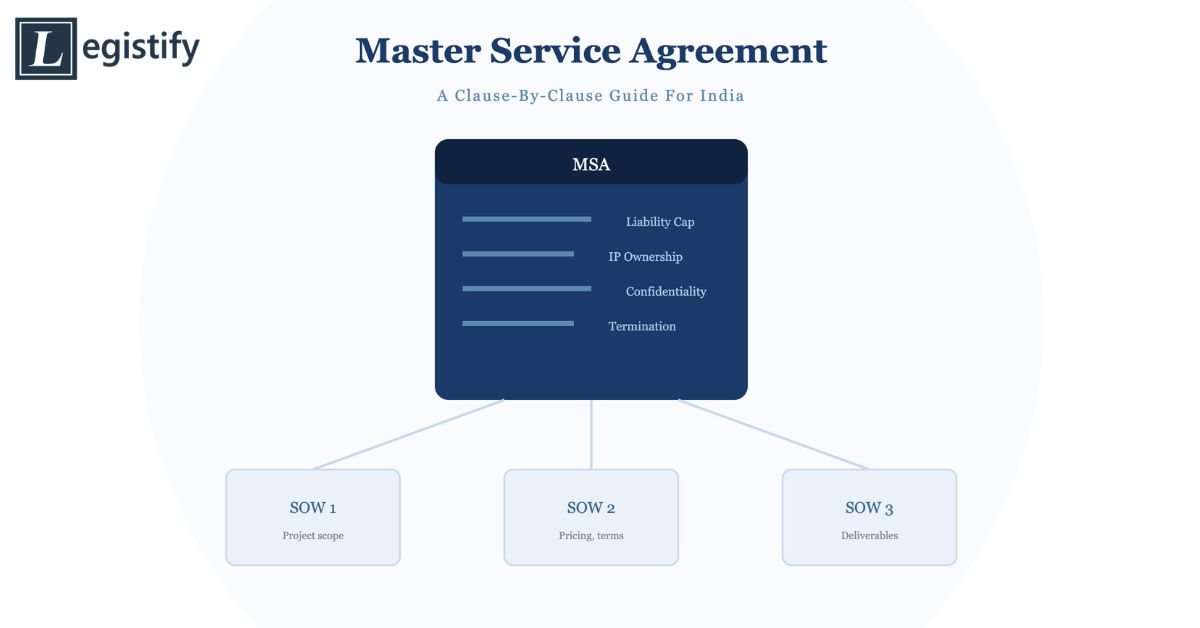
AI continues to add value after agreements are executed by tracking commitments, renewals, SLAs, and compliance dates. It ensures milestones are not missed, and the tracking of related documents — such as MSAs linked to SOWs — maintains adherence throughout the operational lifecycle.
How Legistify Brings This to Life
Legistify applies these AI capabilities in practice for enterprise legal teams. The platform is built to help organisations manage contracts end to end, improving visibility, consistency, and control across the full lifecycle.
Dabur India uses Legistify to track more than 2,000 contracts, ensuring no renewals are missed and contractual obligations are monitored consistently. This AI-driven approach helps legal teams stay compliant, reduce risk, and support business operations at scale without adding manual effort or headcount.
How AI Shifts the Role of Legal Teams

By handling repetitive work, AI allows lawyers to focus on high-stakes negotiations, risk planning, and compliance strategy. Legal professionals move from administrative roles to strategic advisors — making proactive, informed decisions that support business growth without expanding the legal team’s headcount.
Challenges and Considerations
Adopting AI in contract management requires following implementation best practices. Clean data, structured templates, and strong governance policies are essential foundations. AI complements human judgment — it does not replace legal expertise, but it does make that expertise more effective.
The Future of AI-Powered Contracting
The direction of AI in contracting is toward greater autonomy and predictive capability. Agentic processes will handle more automation, analytics will drive prediction, and real-time compliance monitoring will reduce the risk of violations before they occur. AI support will be embedded across every stage of the contract lifecycle.
Conclusion
AI is reshaping contract management from drafting and negotiation through to post-execution monitoring. Legal departments can work more efficiently, analyse risks more effectively, and provide insights that manual processes cannot match. AI does not reduce the role of lawyers — it allows the legal function to become a more strategic partner to the business.