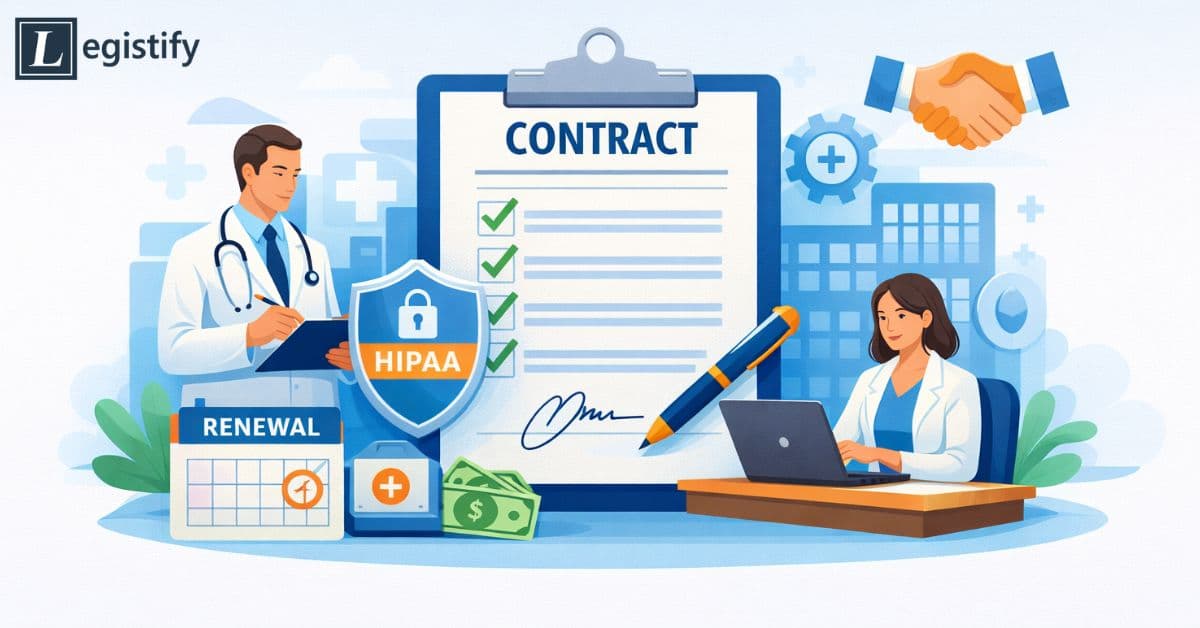
Healthcare organisations manage contracts with physicians, vendors, and insurance providers that affect multiple areas of their operations. With regulatory requirements increasing and contract volumes growing, a structured approach to contract management is essential for maintaining compliance and operational control.
Healthcare contract management covers all phases of a contract — from creation and negotiation through tracking and renewal.
What is Healthcare Contract Management?
Healthcare contract management is the process of managing all contracts between a healthcare organisation and its stakeholders throughout their lifecycle. This includes creating, reviewing, approving, executing, monitoring, and renewing or terminating contracts.
Healthcare organisations are required to adhere to strict laws and regulations that most other businesses are not. HIPAA, Stark Law, and Anti-Kickback laws require that contracts are structured in a way that is compliant and beneficial to all parties involved.
Healthcare organisations typically manage contracts with a wide range of stakeholders — insurance companies, physicians, equipment vendors, and technology vendors — which requires coordination across multiple internal departments.
A well-managed contract benefits a healthcare organisation in several ways. Many are now using Contract Lifecycle Management (CLM) tools to manage their contracts at scale, reducing costs and ensuring all contracts are executed and monitored properly.
Key Stages of the Healthcare Contract Lifecycle
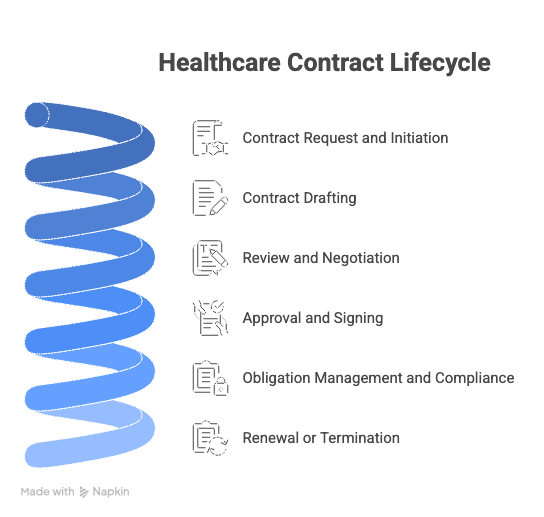
Healthcare contracts follow a defined lifecycle process that ensures they are properly generated, approved, and managed. Each stage contributes to operational objectives and regulatory compliance.
1. Contract Request and Initiation
The lifecycle begins when a department identifies the need for a contract. In healthcare, this might mean acquiring medical equipment, recruiting physicians, partnering with a diagnostic lab, or engaging an insurance company.
During initiation, the objectives and scope of the contract are defined. Key factors — deliverables, milestones, performance expectations, and financial terms — are documented at the outset to ensure the contract meets operational needs. Accurate documentation at this stage helps prevent misunderstandings later in the process.
2. Contract Drafting
Once the contract request is approved, the legal or procurement department drafts the contract using standardised templates and customised clauses suited to the nature of the arrangement.
Healthcare contracts typically include provisions on patient information protection, regulatory compliance, performance requirements, and payment structures. The legal team reviews the draft to confirm all provisions comply with applicable laws. Standardised templates speed up drafting while ensuring legal requirements are consistently covered.
3. Review and Negotiation
The initial draft moves into review and negotiation, which involves legal, financial, procurement, and operations teams. Both sides discuss pricing structures, service-level agreements, liabilities, reimbursement structures, and termination provisions.
Healthcare contracts often involve multiple stakeholders, which means negotiation can take time. A well-defined workflow speeds up the process and keeps collaboration on track.
4. Approval and Signing
Once all parties agree to the contract terms, it moves through the approval process. Authorised personnel review and approve the final version before execution.
Many healthcare organisations now use electronic signatures to replace paper-based approval routing, which was time-consuming and prone to delays. Automated approval systems ensure all required stakeholders are reached on time and all sign-offs are obtained before the contract is executed.
5. Obligation Management and Compliance
After execution, the organisation must monitor the contract to ensure both parties are meeting their obligations. This includes tracking key deadlines, performance metrics, service levels, equipment maintenance, and insurance reimbursement requirements.
Compliance monitoring is a critical part of this stage. Healthcare organisations must verify that all contract activities align with regulatory requirements and internal policies. CLM systems support this with dashboards, reports, and automated alerts to keep monitoring on track.
6. Renewal or Termination
As a contract nears expiration, the organisation must decide whether to renew, renegotiate, or terminate. This involves assessing vendor performance, reviewing financial outcomes, and determining whether the arrangement still serves the organisation’s objectives.
Renewal alerts notify the relevant teams before expiration dates arrive, preventing contracts from auto-renewing on unfavourable terms. Active renewal management helps healthcare organisations build better partnerships and improve contract terms over time.
Types of Healthcare Contracts
Healthcare organisations manage various types of contracts, each serving a distinct function and involving different stakeholders.
- Vendor Supply and Service Contracts
Healthcare providers rely on vendors for diagnostic equipment, pharmaceutical products, IT supplies, laboratory tools, and facilities management services. Vendor contracts cover pricing models, delivery schedules, service levels, and warranties. Because equipment reliability directly affects patient care, these contracts typically include detailed service level agreements to ensure timely vendor response and maintenance.
- Physician Employment Contracts
Physician employment contracts govern the relationship between healthcare organisations and physicians, covering compensation structures, work schedules, and responsibilities. They may also include incentives such as relocation expenses, signing bonuses, and productivity-based pay. These contracts help the organisation comply with regulations governing financial relationships with medical professionals.
- Payer-Provider Agreements
Payer-provider agreements are signed between providers and insurance companies to define reimbursement rates and billing methods. These contracts directly affect a provider’s financial performance, making their effective management essential to ensure insurance providers pay in accordance with agreed terms.
- Confidentiality and Non-Disclosure Agreements
Healthcare organisations handle sensitive data including patient information, research results, and proprietary business information. Confidentiality and non-disclosure agreements define how this information is managed and shared, particularly in partnerships or collaborations that require access to it. These contracts are essential for protecting patient confidentiality and meeting applicable privacy laws.
Why Healthcare Contract Management is Important
Effective healthcare contract management supports several organisational objectives that directly affect operational and financial outcomes.
- Regulatory Compliance
Healthcare regulations focus on patient protection and ethical business practices. Contract management ensures that all contracts comply with applicable laws and internal policies, reducing the risk of violations.
- Financial Performance
Contract terms define payment structures and pricing arrangements. Effective contract management keeps financial obligations on track and reduces losses from missed reimbursements or value leakage.
- Operational Efficiency
Centralised contract data improves communication across departments and supports faster responses to operational needs. Teams spend less time searching for documents and more time acting on the information they contain.
- Risk Mitigation
Well-defined contracts and active monitoring reduce the risk of disputes, regulatory violations, and financial penalties.
Common Challenges in Healthcare Contract Management
Healthcare organisations face several challenges in managing contracts at scale.
- Regulatory Complexity
Healthcare regulations change frequently, requiring contracts to be updated regularly to stay compliant. Keeping pace with these changes across a large contract portfolio is a demanding ongoing task.
- High Contract Volume
Healthcare institutions manage large numbers of contracts across multiple vendor types, insurance arrangements, and physician agreements. Without the right systems, tracking all of them consistently becomes difficult.
- Limited Visibility
When contracts are spread across multiple systems and departments, getting a complete view of the portfolio is difficult. Without centralised contract management, gaps in visibility lead to missed obligations and compliance risks.
- Financial Leakage
Ineffective contract management often results in missed reimbursements, unclaimed incentives, and lost revenue from poorly tracked financial terms.
Best Practices for Effective Healthcare Contract Management
Healthcare organisations can strengthen their contract management processes through a combination of structured practices and the right technology.
- Use a Centralised Contract Repository
Storing all contracts in one location ensures that all teams are working from the most current version. It also makes contracts easier to search, retrieve, and audit when needed.
- Implement Automated Alerts
Automated alerts keep teams informed of critical milestones such as renewal dates, compliance deadlines, and performance review windows — reducing the risk of missed obligations.
- Conduct Regular Contract Audits
Periodic contract reviews help organisations stay current on compliance requirements, assess vendor performance, and identify contracts that need renegotiation.
- Use Standardised Templates
Standardised templates speed up drafting, ensure legal requirements are consistently covered, and reduce the risk of errors from creating contracts from scratch each time.
The Role of Technology in Healthcare Contract Management
CLM platforms give healthcare organisations tools for centralising contracts, automating processes, and monitoring performance metrics across their full contract portfolio. Automation reduces manual effort and improves accuracy, giving teams a clearer view of obligations and deadlines.
Modern CLM tools also use AI to analyse contracts, identify risks, and extract critical clauses — supporting better decision-making and more proactive contract management across the organisation.
Conclusion
Healthcare contract management helps organisations stay compliant, manage financial relationships, and work effectively with vendors, insurance companies, and medical practitioners. A structured approach to contract management — supported by the right technology — gives healthcare organisations greater efficiency and control across their contract portfolios.